It's one of the most frustrating things that can happen during a Florida summer: your AC is running, the fan is blowing, but the air coming out isn't cold. Before you panic, you should know that this is one of the most common service calls we get here at Farrell Air Conditioning. The good news? Some causes are simple fixes you can handle yourself, while others just need a quick visit from a pro. Let's walk through every possibility so you can figure out what's going on.
1. Your Air Filter Is Clogged
This is the number one reason AC systems lose cooling power, and it's the easiest to fix. A dirty, clogged air filter restricts airflow over the evaporator coil. When the coil can't absorb enough heat from the air, your system blows lukewarm air even though it's technically running.
What to Do:
- → Check your air filter right now. If it looks gray, dusty, or you can't see light through it, it needs to be replaced.
- → In Florida, we recommend changing your filter every 30 to 60 days during the summer months when your system runs almost constantly.
- → Check out our complete guide to air filters in Florida for help picking the right one.
2. Your Evaporator Coil Is Frozen
If you open the indoor air handler and see ice or frost on the copper lines or coil, you've found the problem. A frozen evaporator coil can't absorb heat from your home's air, so your system blows air that feels barely cool or completely warm. This usually happens because of restricted airflow (a dirty filter, closed vents, or a failing blower motor) or low refrigerant.
What to Do:
- → Turn off your AC immediately and switch the fan to "ON" to help thaw the coil. Do not keep running it while frozen, as this can damage the compressor.
- → Check and replace your air filter, then make sure all supply vents throughout your home are open and unblocked.
- → If the coil freezes again after thawing, call a technician. Recurring freeze ups usually mean a refrigerant leak or a blower motor issue that needs professional diagnosis.
3. Low Refrigerant (Freon Leak)
Refrigerant is the lifeblood of your AC system. It's the chemical that actually absorbs heat from your indoor air and releases it outside. Your system doesn't "use up" refrigerant like gas in a car. If it's low, that means there's a leak somewhere in the system. Low refrigerant drastically reduces cooling capacity and, if left unchecked, will eventually destroy your compressor, which is the most expensive component to replace.
Signs of Low Refrigerant:
- ✓ Air from vents feels lukewarm even when set to the lowest temperature
- ✓ Hissing or bubbling sounds near the indoor unit
- ✓ Ice forming on refrigerant lines or the evaporator coil
- ✓ Your electric bill is climbing while comfort is declining
This is not a DIY fix. Refrigerant must be handled by an EPA certified technician. Simply "topping off" refrigerant without finding and repairing the leak is a temporary fix that will cost you more in the long run. Our technicians at Farrell AC use electronic leak detectors to pinpoint the issue and make a lasting AC repair.
4. Dirty Outdoor Condenser Unit
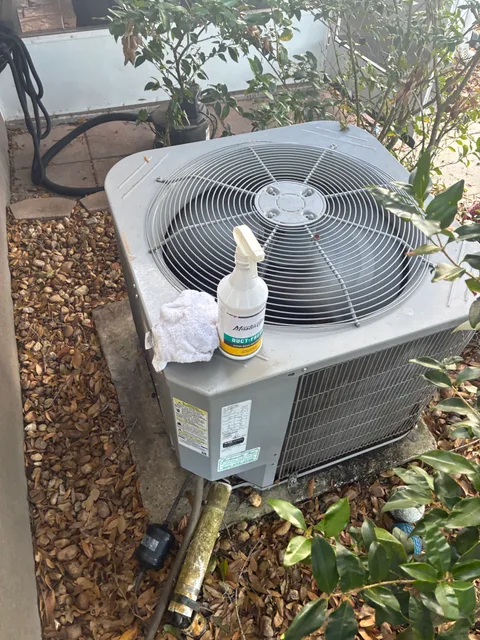
Your outdoor condenser unit is where the heat absorbed from inside your home gets released outside. If the condenser coil is caked with dirt, grass clippings, pet hair, or debris, it can't release heat efficiently. The result? Your indoor air stays warm because the system can't complete the cooling cycle properly. In Florida's environment, pollen, dust, and lawn debris build up fast, especially during spring and summer.
What You Can Do:
- → Clear any vegetation, debris, or objects within 2 feet of the outdoor unit on all sides.
- → Gently rinse the condenser coil fins with a garden hose (not a pressure washer) from the inside out.
- → For a thorough deep cleaning, schedule an AC tune up with our team. We use professional coil cleaner to remove buildup you can't see.
5. Thermostat Problems
Sometimes the AC itself is perfectly fine, but the thermostat is giving it the wrong instructions. A miscalibrated thermostat, dead batteries, or incorrect settings can all make it seem like your AC isn't cooling when it's actually just not being told to cool.
Quick Thermostat Checks:
- → Make sure it's set to "COOL" mode (not "HEAT" or "FAN ONLY") and the fan is set to "AUTO".
- → Set the temperature at least 3 to 5 degrees below the current room temperature to ensure a cooling call.
- → Replace the batteries if your thermostat uses them. A low battery can cause erratic behavior.
- → If you have a programmable or smart thermostat, check the schedule to make sure it's not overriding your desired temperature.
6. Failed Capacitor or Electrical Issue
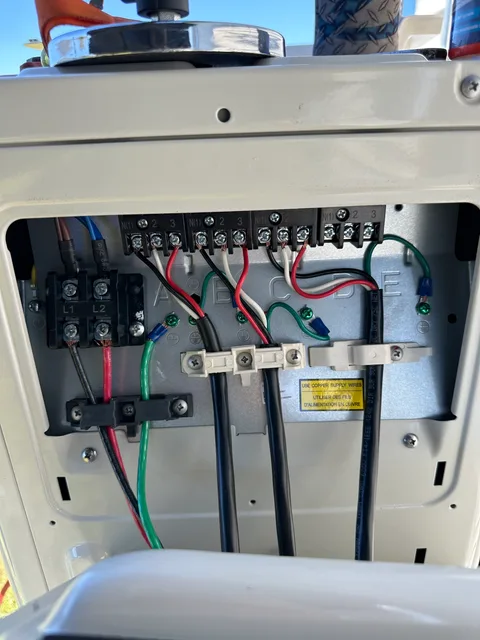
Capacitors are small electrical components that give your compressor and fan motors the boost they need to start and keep running. In Florida's extreme heat, capacitors wear out faster than in cooler climates. A failing capacitor might allow the fan to spin but not the compressor, meaning your system is blowing air but not actually cooling it.
Signs of a Bad Capacitor:
- ✓ AC takes a long time to start or won't start at all
- ✓ Humming sound from the outdoor unit without the compressor running
- ✓ System shuts off randomly during operation
- ✓ Outdoor fan spins sluggishly or not at all
⚠ Warning: Capacitors store electrical charge even when the power is off. Never attempt to test or replace a capacitor yourself. This is a quick and affordable repair for a licensed technician, but dangerous for a homeowner.
7. Leaky or Disconnected Ductwork
Your AC might be cooling air perfectly, but if that cold air is leaking into your attic before it reaches your living spaces, you'll never feel it. Ductwork problems are extremely common in Florida homes, especially older ones. Ducts in hot attics expand and contract with temperature changes, and over time the connections loosen, tape deteriorates, and gaps form. The Department of Energy estimates that the average home loses 20 to 30% of conditioned air through duct leaks.
Warning Signs of Duct Problems:
- ✓ Some rooms cool well while others stay warm
- ✓ Weak airflow from certain vents
- ✓ Excessive dust in your home despite changing filters
- ✓ Higher than expected energy bills with no change in usage
We offer professional duct cleaning and inspection services. Our technicians can identify leaks, disconnections, and damaged insulation and get everything sealed up tight so your cold air reaches every room.
8. Compressor Failure: The Worst Case Scenario
The compressor is the heart of your AC system. It's the component that actually pumps refrigerant through the system to absorb and release heat. When a compressor starts to fail, it can still run but produce little to no cooling. Complete compressor failure is the most expensive AC repair, and in many cases, it makes more sense to replace the entire system rather than just the compressor.
Common Causes of Compressor Failure
Running the system with low refrigerant, electrical issues, lack of maintenance, or simply old age. Most compressors in Florida last 10 to 15 years with proper care.
Repair vs. Replace
If your system is over 10 years old and the compressor fails, replacement is usually the better investment. Newer systems can be more efficient, but compare the installed cost and current rebates before deciding. Federal AC tax-credit rules changed for 2026.
Check Your System's Lifespan
Not sure how long your unit should last? Read our guide on how long AC units last in Florida to help you decide.
Quick Troubleshooting Checklist Before You Call
Before scheduling a service call, run through this quick checklist. It could save you time and money:
☐ Check the thermostat
Set to COOL, fan on AUTO, temperature set below current room temp
☐ Replace the air filter
If dirty or you can't remember when you last changed it
☐ Check the breaker
Make sure both the indoor and outdoor circuit breakers are ON
☐ Open all vents
Make sure all supply and return vents are open and unblocked
☐ Clear the outdoor unit
Remove debris and ensure 2 feet of clearance on all sides
☐ Check for ice
Look at the copper lines and indoor coil for frost or ice buildup
When to Call a Professional
If you've gone through the checklist above and your AC still isn't cooling, it's time to call in a professional. At Farrell Air Conditioning, we diagnose the issue fast and give you honest options, never upselling you on repairs you don't need.
Call us right away if:
- • The system is making unusual sounds (grinding, screeching, or banging)
- • You see ice on the indoor coil or refrigerant lines
- • The outdoor unit is running but the fan isn't spinning
- • You smell a burning or electrical odor from any part of the system
- • The system short cycles (turns on and off repeatedly in quick intervals)
We serve homeowners throughout Port Richey, New Port Richey, Spring Hill, Hudson, Trinity, and all of Pasco and Hernando County. Same day service is available for emergency calls, whether you need AC repair in Port Richey or AC repair in Spring Hill.
AC not cooling? Don't sweat it. Call Farrell Air Conditioning for fast, honest diagnosis and repair:
727-327-7355 (Port Richey) | 352-720-8636 (Spring Hill)