If we pulled the work orders from any random week in July across our Port Richey and Spring Hill service areas, capacitor replacements would outnumber every other repair combined. It is the most common AC service call in Pasco County, a familiar repair for our technicians, and one homeowners often panic about because the symptoms feel catastrophic. The AC stops cooling, the outdoor fan stops spinning, and the unit just hums. Here is what is actually happening and what it costs to fix.
What an AC Capacitor Actually Does
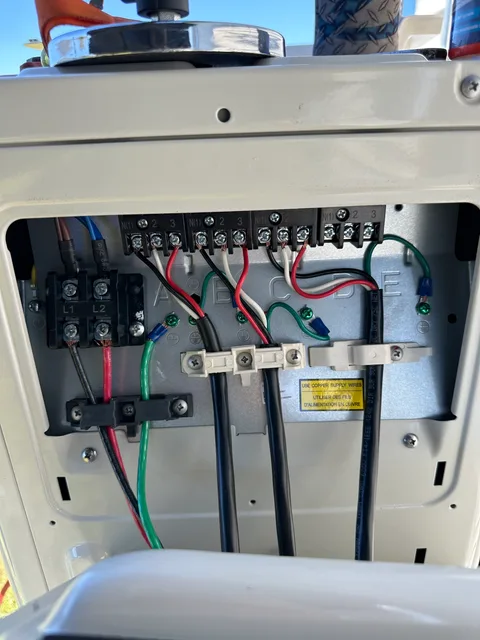
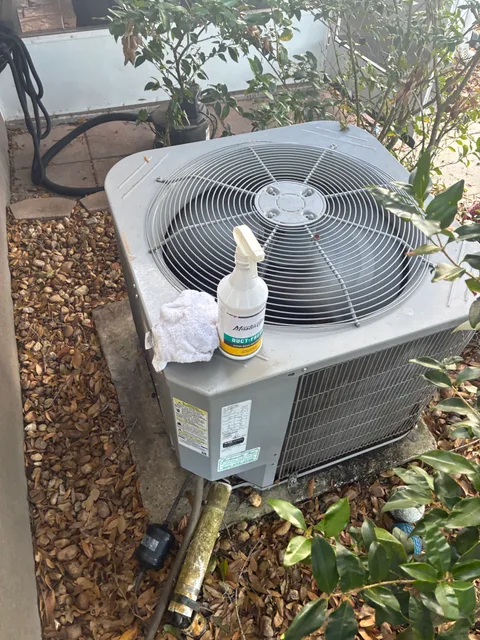
Inside your outdoor condenser unit there is a small cylindrical part, usually silver, about the size of a soda can. That is the dual run capacitor. It does two jobs. First, it gives the compressor and the outdoor fan motor the burst of stored energy they need to start spinning, because both motors require several times their running current to overcome inertia. Second, it stabilizes the voltage to those motors while they are running. When the capacitor fails, one or both motors lose the kick they need to start. The compressor will sit there humming because it is getting power but cannot turn over. The fan will refuse to spin. The system trips a breaker, or it just sits there making noise. In either case, no cooling.
The Outdoor Fan Will Not Spin
You walk outside, the air handler is running inside the house, but the big fan on top of the outdoor unit is sitting still. Sometimes you can give the blades a push with a stick and they will start spinning on their own (please do not do this with the power on). When the fan needs a manual push to start, the start torque from the capacitor is gone. That is a capacitor on the way out. Even if the system seems to be working after the push, replace the capacitor that week. The next start cycle may not start at all.
The Unit Hums but Does Not Start
The thermostat calls for cooling. You hear the outdoor unit make a low humming or buzzing sound, but nothing else happens. After thirty to sixty seconds, the system trips a breaker or the safety overload kicks in and the humming stops. This is the compressor sitting there with power but no start torque. Running the system in this state for more than a few minutes can burn out the compressor, which is the single most expensive part in your AC. If you hear the hum, turn the thermostat off and call us. Do not keep trying to restart it.
A Bulging or Leaking Capacitor Top
If you ever have the access panel off your outdoor unit (always with the power off), look at the top of the capacitor. A healthy capacitor has a perfectly flat top. A failed one bulges upward like a swollen can, sometimes with a yellow or brown oily residue leaking from the seal. Once the top has bulged, the capacitor is done. Even if the system still runs today, you are on borrowed time. We see at least one bulged capacitor per week on routine maintenance visits across Hudson, New Port Richey, and the Spring Hill area. Caught early it is a planned replacement. Caught late it is a Saturday night emergency call.
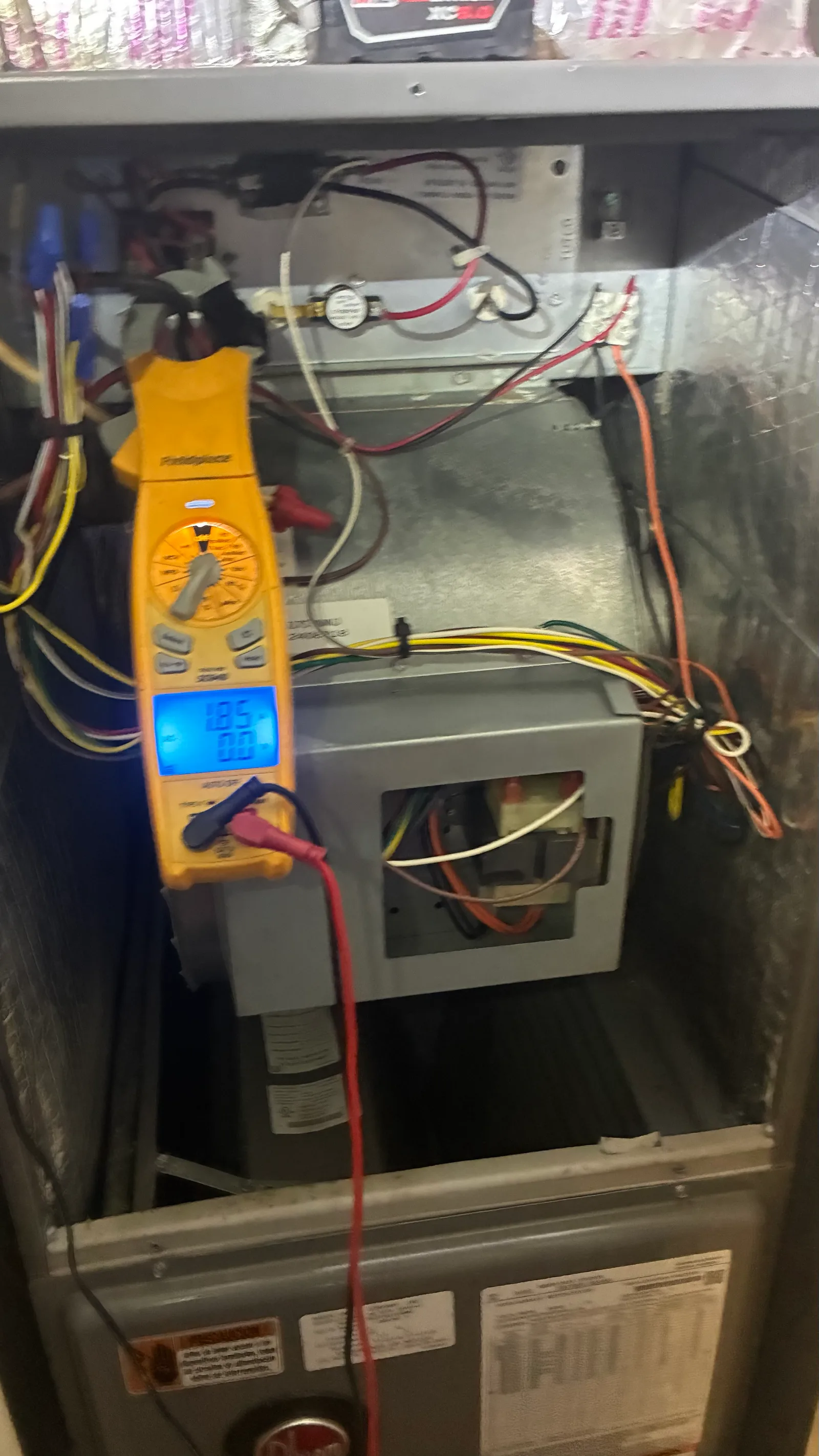
Capacitors are rated for a specific microfarad value (printed on the side of the can). As they age, the actual capacitance drops below the rating. A tech with a multimeter can measure this in thirty seconds. A capacitor reading more than ten percent below its rating is failing and should be replaced even if the system still seems to be running. We measure every capacitor on every maintenance visit. That is how we replace them on the schedule we choose instead of the schedule they choose.
Why Florida Heat Kills Capacitors Faster
Capacitors are rated to operate between certain temperature limits. Most residential AC capacitors are designed for ambient operation up to one hundred and ninety degrees Fahrenheit. The inside of your outdoor unit on a ninety five degree Pasco County afternoon, with the compressor running and the sun beating on the metal cabinet, can hit one hundred and sixty degrees easily. Across an entire Florida summer, that thermal stress degrades the electrolyte inside the capacitor a little more every day. Capacitors that might last fifteen years in a temperate climate routinely fail at year five to seven in our heat. That is not a defect. That is what heat does to electrolytic components.
What a Capacitor Replacement Actually Costs
Start with the diagnosis. A capacitor replacement depends on the required rating, the part, access and whether the contactor, wiring or another component also needs work. Our AC repair cost guide separates diagnostic visits, selected small repairs and larger component work so you can compare the right scope. The current residential diagnostic charge is $90, or $195 after hours and on weekends. The visit charge is not automatically waived or credited toward a repair. We give you a written repair price and explain any applicable parts and labor coverage before you approve the work. If two quotes look far apart, compare the parts, included work and warranty terms rather than just the total.
Why This One Is Not a DIY Project
An online part price is only one piece of a professional repair. The replacement also needs the right electrical rating and a check of the fault that stopped the system. The reason we strongly recommend a licensed technician handle the swap is that the capacitor stores a high voltage charge even with the power disconnected. A discharged capacitor is safe to handle. A charged capacitor can deliver a serious electrical shock through bare hands or tools. Our technicians discharge the old capacitor with a resistor before removing it. A homeowner without the right tool can have a very bad afternoon. The cost of a professional replacement is mostly the labor, the diagnostic, and the safety of the discharge.
How to Catch It Early, Every Year
The capacitor is checked at every Farrell Air Conditioning maintenance plan visit, once or twice a year depending on the plan. The technician checks the measured value against the rated value and inspects the part. If replacement is needed, we explain the separate repair and price before proceeding. The routine checklist also includes coolant pressure checks, electrical inspections, condenser and condensate-drain cleaning, and evaporator coil inspection. Deeper coil cleaning, refrigerant and replacement parts are separate work when needed.
Stop Running the System If You See These
A capacitor failure is the most common AC repair in Port Richey and across Pasco County, and also the most predictable. If your system is showing any of the symptoms above, call us before running it again. We dispatch same day across Port Richey, Spring Hill, Hudson, Trinity, and the surrounding area. Office number is 727-327-7355 and a real person picks up.