A homeowner in Hudson called our office in June holding a letter from her insurance carrier. Her policy was up for renewal, the carrier had ordered a four point inspection, and the inspector had written up her air handler. The system worked. It cooled the house. It had never had a repair. It was also nineteen years old, and that one line on the report was enough to put her renewal in question. She wanted to know what her AC had to do with her insurance. The honest answer is that in the Florida market right now, it has more to do with it than almost anything else in the house except the roof.
What a Four Point Inspection Actually Is
A four point inspection is a short report an insurance carrier orders on an older home before it will write or renew a policy. It covers exactly four systems: the roof, the electrical, the plumbing, and the heating and cooling. It is not a home inspection. Nobody is checking your windows or your foundation. The inspector photographs those four systems, records the age of each, notes the condition, and files the report with your carrier. Underwriting then makes a decision. The age threshold that triggers one varies by carrier. Forty years is close to universal, thirty is common, and some carriers still order them on homes as young as twenty. The Florida market loosened somewhat in 2026 compared to the worst of the last few years, but the four point is still standard practice on older Pasco and Hernando homes, and HVAC is one of the four things being graded.
The Inspector Reads the Serial Number, Not Your Word
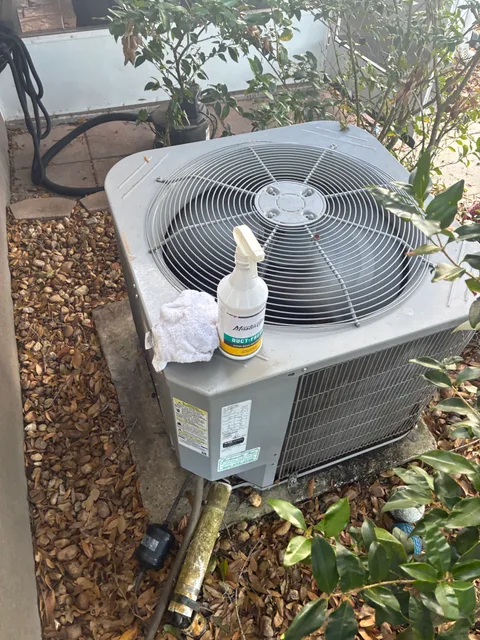
Homeowners tell inspectors all the time that the system is about ten years old. The inspector does not write that down. He walks to the outdoor unit, photographs the data plate, and decodes the manufacture date out of the serial number. Every major brand encodes the year and week of manufacture into that string, and every four point inspector in Florida knows how to read it. If your condenser was built in 2007 and your air handler was built in 2007, the report says 2007, and there is no conversation about it. This is worth knowing because it means the age on the report is a fact, not a judgment call, and it is the single line underwriting looks at first.
Why Carriers Care About an AC That Still Works
An insurance carrier is not worried that your AC will stop cooling. That is your problem, not theirs. What they are worried about is the claim an old system produces on its way out. An aging air handler in a Florida attic sits above finished ceilings with a pan full of condensate under it and a drain line that has been slowly scaling for two decades. When it finally lets go, the claim is not a broken AC. The claim is water damage to drywall, insulation, and flooring, and mold remediation behind it. The other side of the file is electrical. Old contactors, corroded disconnects, and worn compressor windings are a fire risk that carriers have paid on before. Age is a proxy for both of those risks, and a proxy is all underwriting has when it is looking at a photo and a date.
The Five Things That Get an HVAC Section Written Up
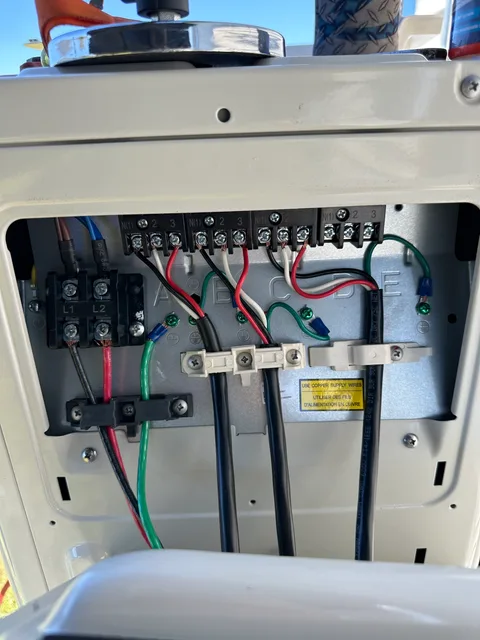
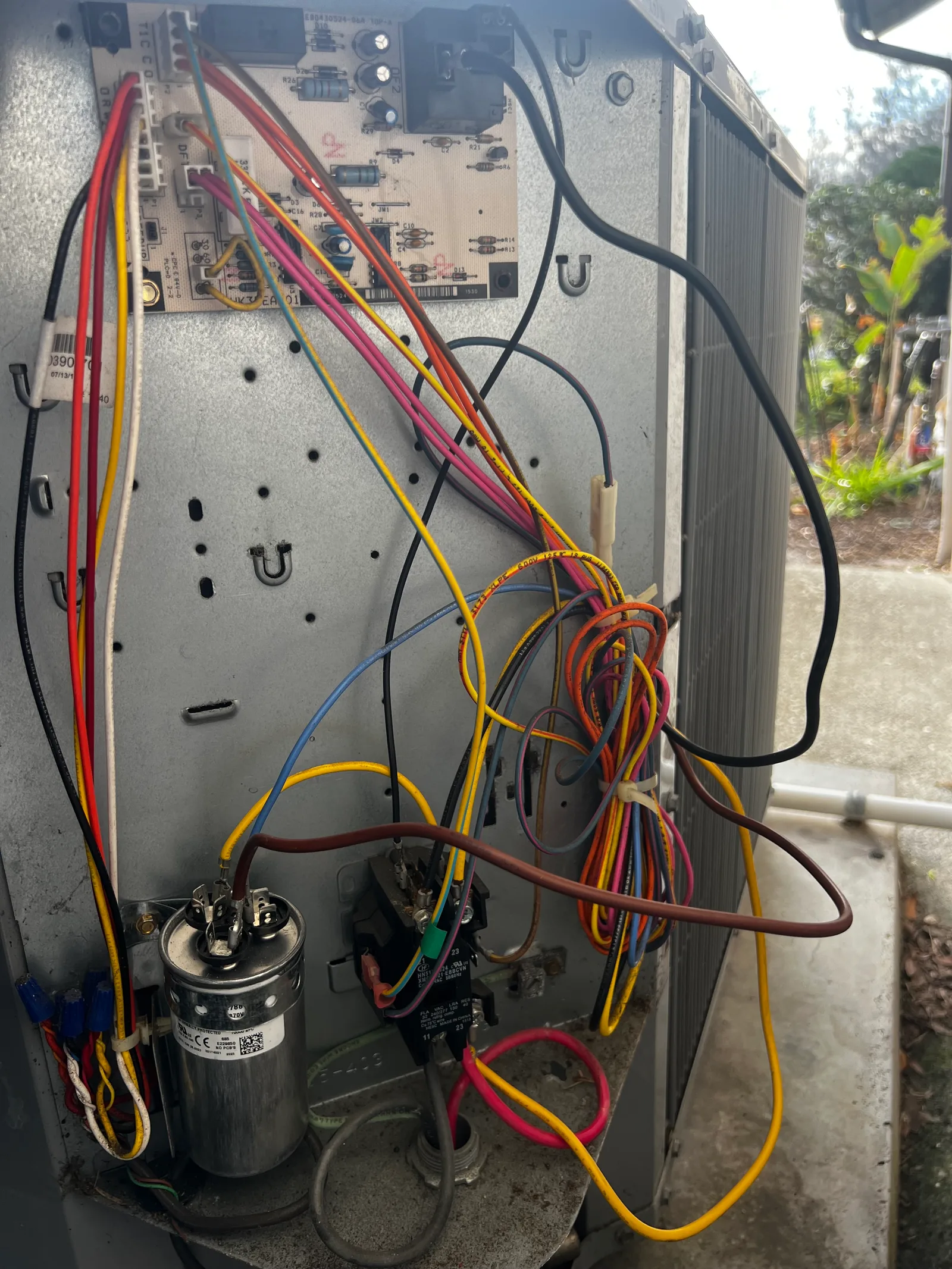
Age is the headline, but it is not the only thing on the form. A system that is not operating at the time of the inspection is close to an automatic fail, so if your AC is down, do not let the inspection happen that day. Active water staining on the ceiling below the air handler, or rust and standing water in the emergency drain pan, gets photographed every time. A missing or bypassed float switch on the secondary pan is a red flag in Florida specifically, because that switch is the thing standing between a clogged drain and a ceiling collapse. Visible rust on the condenser cabinet or badly corroded electrical whips get noted, which is common near the water in Port Richey and Gulf Harbors. And obvious amateur work, meaning wire nuts in the open, a condenser sitting on cinder blocks, or a line set taped instead of sealed, tells the inspector the system was not installed by a licensed contractor.
If your renewal is coming and you know the inspection is coming with it, get the system serviced first, not after. A maintenance visit that clears the drain line, flushes the pan, replaces a weak capacitor, cleans the coil, and tightens the electrical connections removes most of the visual findings an inspector would otherwise photograph. It does not change the age on the data plate, but it changes the condition column from noted issues to none, and on a borderline file the condition column is what tips it.
The Mismatched Age Problem
Here is a situation we see constantly across Pasco and Hernando, and homeowners are always surprised by it. Somebody replaced the outdoor condenser eight years ago because the compressor failed, and left the original air handler in the closet or the attic. The homeowner thinks of the AC as eight years old. The four point report lists both units separately, and the air handler line still says 2004. Underwriting reads the oldest number. You paid for half a new system and got none of the insurance benefit, because the component sitting over your ceiling with a drain pan under it is the original one. If you are planning a replacement with a renewal in view, replacing both halves as a matched set is the only version that changes the number on the report.
The Paperwork That Actually Helps You
If you have replaced your system, the carrier wants proof, and a handwritten receipt from a guy with a truck is not the proof they are looking for. The package that works is the paid invoice showing the install date and the equipment installed, the model and serial numbers of both the condenser and the air handler, the county permit number and the final inspection sign off, and the manufacturer warranty registration. Keep that set together in one folder. When your agent asks, you send four pages and the file closes. When you cannot produce it, an inspector who cannot verify the install date sometimes defaults to the age of the home, and you end up defending a system you already paid to replace.
What to Do If You Already Got the Letter
A notice is not a cancellation. In almost every case there is a window, and the carrier is telling you what would satisfy them. Read the letter for the specific finding, because a write up for a rusted drain pan is a service call and a write up for a twenty two year old system is a replacement conversation. Call your agent before you call anybody else and ask exactly what documentation or what corrective work would clear the condition. Then get the work done and get it documented properly, with photographs and an invoice that names the parts. If the answer really is that the system has to be replaced, you at least now have a deadline and a reason, which is a better position than finding out at renewal next year.
Selling the House Is the Same Conversation
If you are listing a home in Spring Hill, New Port Richey, Trinity, or anywhere in our area, your buyer is going to run into the exact same four point wall, except they will hit it during their financing window with a clock running. An aging AC does not usually kill a deal, but it reliably becomes a price negotiation, and the number the buyer asks for is almost always larger than the number you would have spent handling it yourself. Sellers who replace the system before listing get to advertise it, hand over the permit and warranty package at closing, and skip the repair addendum entirely. Sellers who wait tend to pay for it twice, once in the concession and once in the two weeks the deal sits in limbo.
Get Ahead of the Inspection If Any of These Apply
If you have a four point inspection scheduled, a renewal notice on the counter, or a system old enough that you know the question is coming, we will come out, service the system, and give you a written condition report with photographs, model and serial numbers, and the actual manufacture dates of both units. If a replacement is the right answer we will tell you and quote it in writing, and if it is not we will tell you that too. Our maintenance plan members get that documentation twice a year without asking. Office number is 727-327-7355 and a real person picks up.