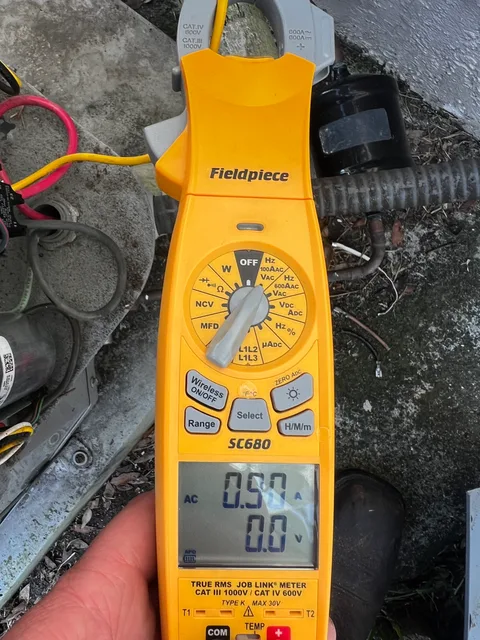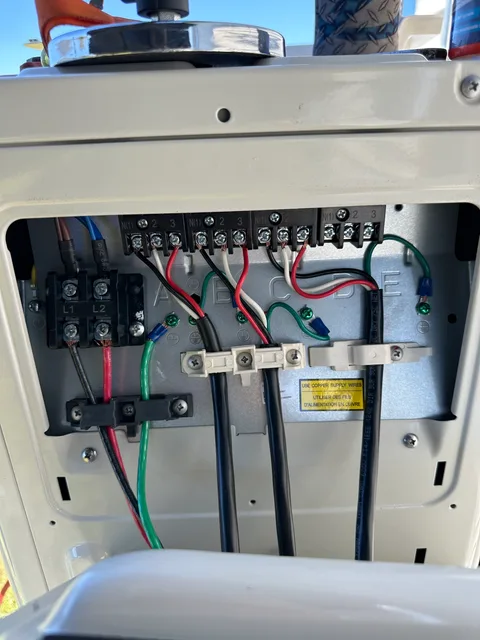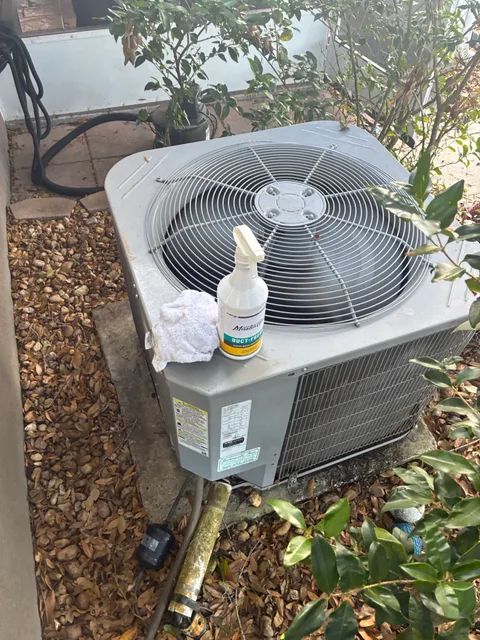
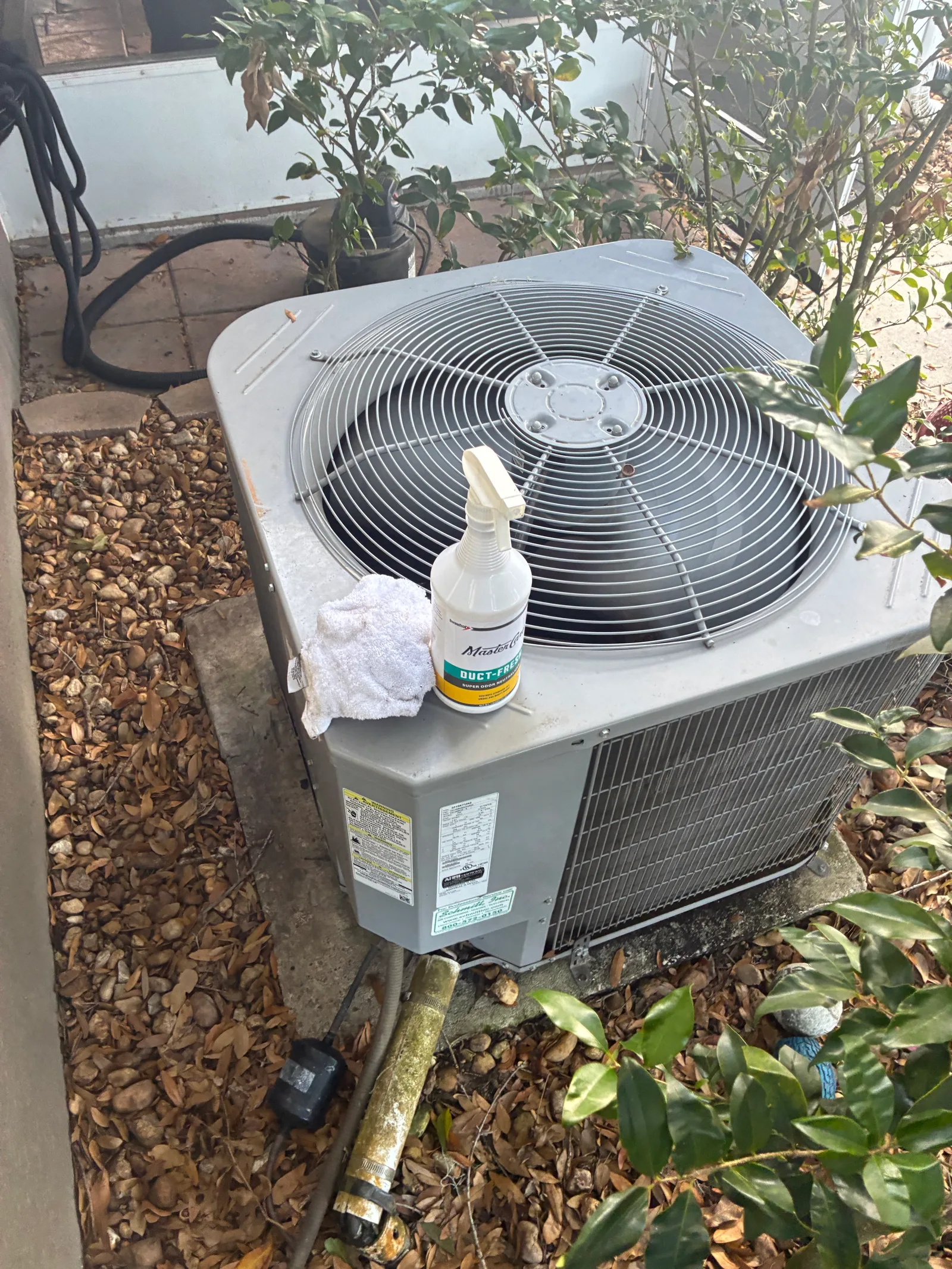
At the start of February a homeowner off Renaissance Avenue in Odessa called us because it looked like something was leaking out of the outdoor unit. The heat was on, and water was collecting around the base of the cabinet. By the time our technician arrived, the explanation was sitting right in front of the equipment. The system was operating in heat mode, the water around it was condensation, and the outdoor unit was entering a defrost cycle. Nothing was broken, the call was canceled on the spot, and there was no charge. That visit is worth retelling because almost everything a heat pump does on a cold Florida morning looks like a problem the first time you notice it. Most of it is the system working exactly the way the manufacturer designed it to. The trick is recognizing the handful of things that are genuinely wrong, and those become easy to identify once you know what normal operation looks like.
How a Heat Pump Heats a Florida House
A heat pump is an air conditioner that can operate in reverse. In the summer it removes heat from the house and releases it outside. In the winter a component called the reversing valve changes the direction of the refrigerant, and the outdoor unit collects heat from the outdoor air and delivers it inside. There is usable heat in forty degree air, and a heat pump gathers it efficiently, which is why so many homes in Pasco and Hernando heat this way. Almost every heat pump here also has electric heat strips in the air handler as a backup. The strips are simple electric resistance coils, and they cost considerably more to run. Most of what follows comes down to two questions. Is the outdoor unit doing its job, and how often are the strips being asked to help?
Steam, Water, and the Defrost Cycle
To collect heat from cool outdoor air, the outdoor coil has to operate colder than the air around it. On a damp morning in the thirties or forties, that coil drops below freezing, and moisture in the air freezes onto it as frost. Periodically the system clears it. It switches back to cooling mode for a few minutes, the outdoor fan stops, the coil warms up, and the frost melts away. While that happens you may hear a whoosh as the reversing valve shifts, see a cloud of steam rising from the top of the unit, and find water around the pad afterward. A defrost cycle typically lasts anywhere from a few minutes to fifteen, and then the fan restarts and the system resumes heating. The steam is water vapor from the melting frost. It is not smoke, and it does not indicate that anything is burning.
Warm Air Is Normal, Hot Air Is Not the Goal
A heat pump delivers warm air rather than the hot blast many people remember from a gas furnace up north. Hold your hand in front of a register and the air can feel almost lukewarm, because it is cooler than your skin expects, even while it is steadily warming the house. A heat pump also operates in longer cycles than a furnace, and on a cold morning it may run for extended periods without shutting off. Neither of those is a failure. During a defrost cycle the air from the registers can turn cool for a few minutes. Many thermostats display auxiliary heat during that window, because the strips switch on automatically to keep the house from receiving a blast of cold air. That message is the system compensating for itself, and it should disappear when the defrost ends.
Before you call anyone about a heat pump that feels weak, run a simple check with a kitchen thermometer. Set the thermostat to heat a few degrees above the room temperature. Wait until the outdoor unit has been operating for ten minutes, then hold the thermometer in a supply register for a couple of minutes. Next, hold it in front of the return grille, where air travels back into the system. Write both numbers down. If the supply is clearly warmer than the return and the outdoor unit is running, the heat pump is doing its job. If the two temperatures are nearly identical with the outdoor unit running, call us and give us both readings.
Inland Homes Defrost More Often
Temperature matters, and it varies more across our service area than people expect. Under the most recent thirty year climate normals, the average January low at Brooksville Tampa Bay Regional Airport is about 44 degrees, and the coldest night of an average January reaches 27. At Tampa International the average January low is about 53, and the coldest night of an average January reaches 34. Colder nights mean more frost on the outdoor coil, more frequent defrost cycles, and more hours on the strips, so a heat pump in Brooksville or Spring Hill will do everything in this article more often than one closer to the Gulf. If you live inland and your January electric bill jumps, the strips are the likeliest reason, and the outdoor unit is usually operating normally.
Auxiliary Heat and Emergency Heat Are Different Settings
Auxiliary heat is the strips assisting the heat pump automatically, during defrost or when the house falls well behind the thermostat setting. Emergency heat is a setting you select, and it locks out the outdoor unit entirely, so the strips heat the house alone. It exists for the day the heat pump itself has failed. Leaving it on by mistake, or choosing it because it feels warmer, means paying strip prices for every hour of heat. The same thing happens when a system is configured incorrectly. This July our technician found a heat pump in Holiday that had been wired at the outdoor unit so the reversing valve could never leave cooling mode, which meant every bit of winter heat in that house had been coming from the strips. If your thermostat displays auxiliary heat constantly on a mild day, have the configuration checked.
The Failures That Are Real
When a heat pump genuinely stops heating, the cause is usually one of a short list of components. A defrost control board that fails allows the outdoor coil to ice over and stay iced, and in January we replaced one in New Port Richey for $465, including the service call. A reversing valve can stick or leak, and in March a leaking valve in Hudson was replaced with a new factory valve, refrigerant, and a filter drier for $2,800. A failed outdoor fan motor or capacitor can keep the outdoor unit from running at all, and in February a New Port Richey homeowner with no heat and an outdoor unit that would not come on needed a new condenser fan motor and capacitor, which came to $790 with the service call. Each of those failures produces a distinct symptom, and none of them resembles steam on a cold morning.
When Ice Is Actually a Problem
A thin white frost that disappears after a defrost cycle is normal. A solid sheet of ice covering the coil and the top of the unit is different. So is ice that remains an hour later, or a defrost cycle that never seems to finish. Those point to a failed defrost control, a defective sensor, low refrigerant, or a fan that is not operating. Do not chip at the ice or pour hot water on the coil, because the fins bend easily and the refrigerant tubing behind them is thin. Switch the thermostat to emergency heat so the strips carry the house, and call.
When You Should Not Call Us
Steam on a cold morning, a whoosh from the outdoor unit, the fan pausing for a few minutes, water on the pad, auxiliary heat displayed during a defrost, air that feels warm rather than hot, and long run times on the coldest days are all a heat pump doing its job. If what you are seeing is on that list, the thermometer check above will confirm it in ten minutes, and you can save the service call. The homeowner in Odessa did exactly the right thing by calling when something looked wrong, and the correct answer that day simply turned out to be no repair at all.
Signs a Heat Pump Needs a Technician
Common Questions
Why is steam coming out of my heat pump?
On a cool, damp morning the outdoor coil collects frost, and the heat pump runs a defrost cycle to melt it. The steam is water vapor from the melting frost. It is normal, it usually lasts anywhere from a few minutes to fifteen, and the system goes back to heating afterward.
Why is my heat pump blowing cool air in heat mode?
During a defrost cycle the air from the registers can feel cool for a few minutes, and heat pump air always feels warm rather than hot. Hold a kitchen thermometer in a supply register and then at the return. If the supply is clearly warmer, the system is working. If both read about the same with the outdoor unit running, call for service.
Is it normal for my heat pump to have ice on it in winter?
A thin frost that clears after a defrost cycle is normal. A solid sheet of ice covering the coil and the top of the unit, or ice still there an hour later, points to a failed defrost control, a bad sensor, low refrigerant, or a fan that is not running. Switch the thermostat to emergency heat and call.
What is the difference between auxiliary heat and emergency heat?
Auxiliary heat is the electric strips helping the heat pump automatically, during defrost or when the house falls behind the thermostat setting. Emergency heat locks out the outdoor unit so the strips heat the house alone. Use it only when the heat pump itself has failed, because strip heat costs considerably more to run.
How much does it cost to repair a heat pump that will not heat?
It depends on the part. In Farrell Air Conditioning's 2026 jobs, a defrost control board came to $465 with the service call, a condenser fan motor and capacitor came to $790 with the service call, and a leaking reversing valve replaced along with refrigerant and a filter drier came to $2,800.
Who should I call about a heat pump not heating in Spring Hill or Port Richey?
Use a licensed Florida contractor who will test the defrost control, reversing valve, fan motor, and strips before replacing parts. Farrell Air Conditioning, license CAC#1818177, services heat pumps across Port Richey, New Port Richey, Hudson, Holiday, Trinity, Odessa, Spring Hill, and Brooksville.
We service heat pumps across Port Richey, New Port Richey, Hudson, Holiday, Trinity, Odessa, Spring Hill, and Brooksville. If the outdoor unit is iced solid, silent with the heat on, or the air at the registers is no warmer than the room, we will test the defrost control, the reversing valve, the fan motor, and the strips, and tell you which one failed before we replace anything. If what you saw was a defrost cycle, we will tell you that too. Read more about our heating and heat pump service in Port Richey and in Spring Hill. Farrell Air Conditioning holds Florida license CAC#1818177. Office number is 727-327-7355 and a real person picks up.