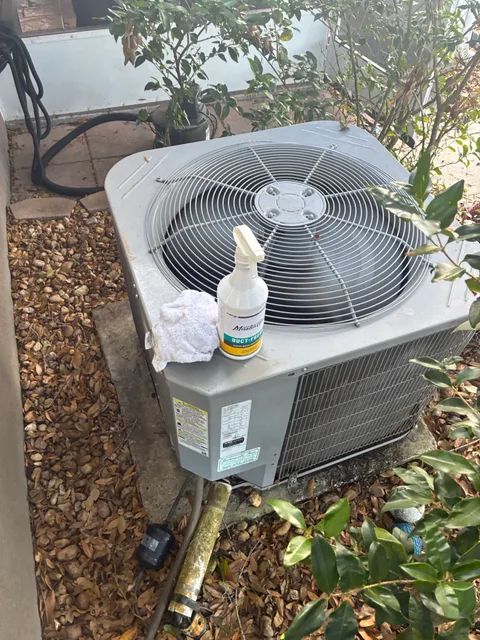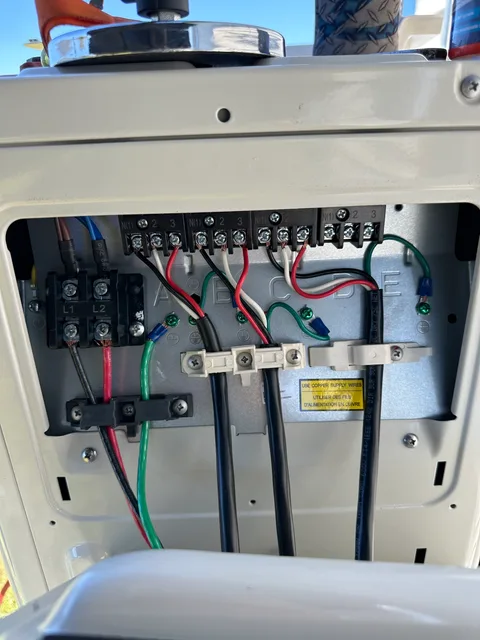
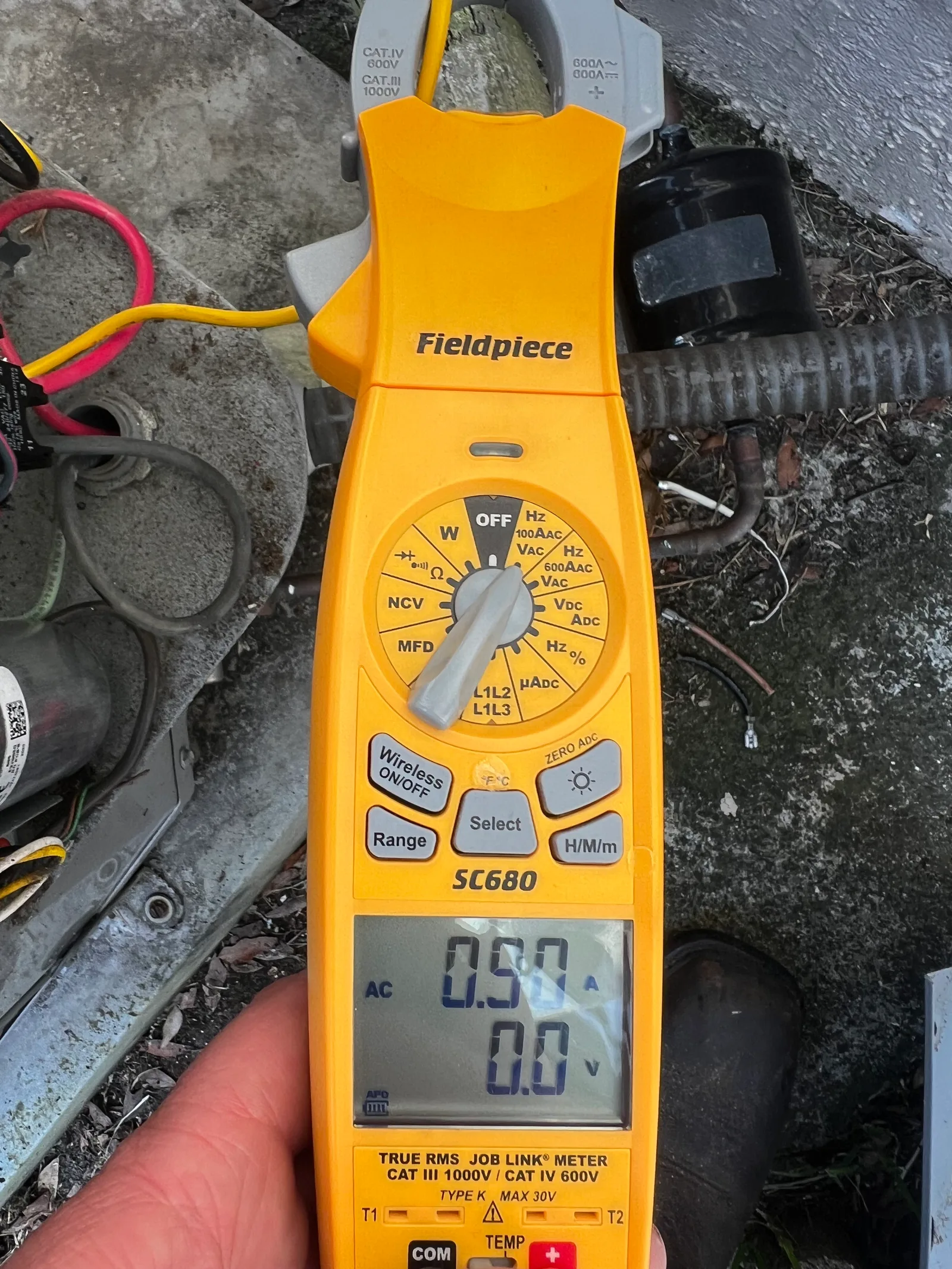
On the Saturday of Labor Day weekend, one of our technicians answered an after hours call off Richard Drive in Spring Hill. The homeowner had already replaced the contactor, the capacitor, and the outdoor fan motor, and the system still was not running properly. Our technician listened to the compressor start and wrote it down plainly on the ticket: it sounded horrible on start up, and it was about to fail. Three parts in, the next one was the compressor, which is the single most expensive component in the system. That is the moment this article is about. September is when a lot of these decisions land, after a system has limped through August on one repair after another and the owner is standing in the driveway trying to decide whether to pay for one more. The answer is usually clearer than it feels, and the calendar is on your side if you make the decision now rather than next July.
Repairs Come in Two Very Different Sizes
A capacitor, a contactor, a fan motor, a clogged drain line, and a control board are wear parts. They fail on young systems and old ones alike, they cost a few hundred dollars, and replacing one tells you very little about the condition of everything else. A compressor, an evaporator coil, and a refrigerant leak belong to a different category. They are the expensive core of the system, and on an older system one of them failing is often the first of several. So before age even enters the conversation, sort the failure into one of those two groups. A wear part almost always gets repaired. A core failure on an older system is where the real decision begins, and it deserves a written price and a few days of thought rather than a yes in the driveway.
Get the Failure and the Price in Writing
Our published range for selected repairs, built from completed invoices, runs from $300 to $2,600, and a run capacitor runs $295 to $380 before the service call. Compressors sit at the top of that scale. This summer a three ton compressor replacement in Spring Hill came to $2,500.52 with the refrigerant, and a four ton compressor in Hudson came to $3,286.05 with the refrigerant and a new liquid line drier. When the compressor is still under the manufacturer parts warranty, the part itself is covered and you pay for labor, refrigerant, and the drier. A warranty compressor on a three and a half ton system in Trinity in July came to $1,925.55. Whatever you are told, ask for the failed part to be named on the invoice, along with the model and serial number of both the condenser and the air handler, so you can compare quotes on the same facts.
Age Changes the Math on the Big Repairs
Florida systems run ten to twelve months a year, and near the Gulf the salt air works on outdoor coils year round, so a system here commonly lasts ten to fifteen years rather than the longer life people expect from up north. We covered the reasons in our article on how long an AC lasts in Florida. The point that matters here is simple. A $2,500 compressor on a system that is fourteen years old goes into a cabinet where the coil, the fan motor, and the air handler are also fourteen years old. Sometimes the failure itself makes the decision. In September a technician in Port Richey found metal debris in the coil, which means something failed badly somewhere in the refrigerant circuit, and recommended replacing the coil or the whole system. Another Port Richey system that same month had no refrigerant left in it at all. And if your system still runs on R-22, which has not been produced or imported in this country since 2020, any repair involving refrigerant is expensive in a way that has nothing to do with labor.
Before you decide anything, ask the technician to read you the manufacture date off the data plate on both units. Every major brand encodes the year in the serial number. That date is often a few years older than the age the family remembers, and it is the same date a four point inspector will write down for your insurance carrier. Knowing it turns a vague feeling that the system is getting old into a number you can actually plan around.
Why September and October Are the Right Time to Decide
Last December our crews ran 71 jobs across the whole month. This June they ran 285. That difference is the best argument for deciding in the fall. When a system dies in July, the house is ninety degrees by the afternoon and the decision gets made under pressure, usually by whoever can install the soonest. When a system fails in October, it is an inconvenience. You have time to get a second quote, compare equipment on paper, check the Duke Energy rebates before you sign, and schedule the installation for a day that suits you. The permit and county inspection apply in every season, and in the fall nobody is tempted to skip them to save a day.
There Is No Tax Credit to Wait For
Some homeowners are still holding out for a federal credit, and some quotes still mention one. The federal Energy Efficient Home Improvement Credit covered qualifying equipment placed in service through December 31, 2025. A system installed this fall does not qualify, so waiting gains you nothing, and any quote that promises the credit is working from old information. We updated our article on AC tax credits when the deadline changed. The efficiency floor has not moved. Since January 1, 2023, a typical home sized split air conditioner installed in Florida has had to be at least 14.3 SEER2, and a split heat pump at least 14.3 SEER2 and 7.5 HSPF2.
Think About the Heat While You Replace the Cooling
A lot of older homes in Pasco and Hernando have straight cool systems that heat with electric strips in the air handler. That works, and it is expensive on the few cold weeks we get. A heat pump heats with the same outdoor unit that cools the house in the summer and keeps the strips only as backup. The Department of Energy estimates that a heat pump can cut the electricity used for heating by roughly fifty percent compared with resistance heat like strips. Inland homes feel it more. In Brooksville the coldest night of an average January is 27 degrees, against 34 at Tampa International. If you are replacing the system anyway, ask for the heat pump price alongside the straight cool price and decide with both numbers in front of you.
Ask What a New System Would Actually Fix
A new system fixes a failed compressor, an old coil, and a high summer bill from tired equipment. It does not fix a back bedroom that has always been warm, a house that feels damp at seventy four degrees, or dust that collects faster than it should, because those complaints usually live in the ductwork, the return air path, or the way the system was sized in the first place. If any of them sound familiar, say so before anyone measures for equipment, and ask every contractor what they plan to do about the ducts in your attic. Leaking or crushed duct runs, missing returns, and a system that was oversized the first time will follow you onto a brand new condenser. Sometimes the right replacement is the same size you have today on repaired duct work, and sometimes it is smaller, which costs less and runs longer cycles that pull more moisture out of the air.
When We Tell People to Keep Repairing
A wear part gets repaired at almost any age. A warranty compressor on a young system usually gets repaired too, because the expensive part is covered. In August we gave a free second opinion off Bedford Road in Spring Hill on a system that was roughly thirty years old. It needed a capacitor and a short traced in the wiring, and after a discount the visit came to $150. The system also has a refrigerant problem, and the owner chose not to chase it yet. That is a reasonable way to keep a house cool while a replacement gets planned. Second opinions matter in the other direction as well. In July a homeowner on Hayes Street in Spring Hill had been quoted $3,000 by another company to clean an evaporator coil. We pulled and cleaned the same coil for $1,388.97. If a company recommends replacement and will not quote the repair at all, get another opinion before you sign anything.
Signs It Is Time to Stop Repairing
Common Questions
Should I repair or replace my AC if the compressor fails?
It depends on age and warranty. On a young system with the compressor still under the manufacturer parts warranty, repair usually makes sense, and Farrell's warranty compressor jobs this summer ran about $1,900 to $2,100 with labor and refrigerant. On a system past ten years, an out of warranty compressor at $2,500 to $3,300 is usually better put toward a new system.
How much does AC repair cost in Pasco and Hernando County?
Farrell Air Conditioning's published range for selected repairs is $300 to $2,600, built from completed invoices, and a run capacitor is $295 to $380 before the service call. Out of warranty compressor replacements this summer ran $2,500.52 to $3,286.05 with refrigerant.
How much does a new AC system cost in Port Richey or Spring Hill?
Farrell's published range for Farrell supplied central system replacements is $7,300 to $13,500, built from reviewed completed projects. Size, efficiency, heat pump or straight cool, duct work, and access move the number.
Is fall a good time to replace an air conditioner in Florida?
Yes. A failed system in October is an inconvenience rather than an emergency, which leaves time for a second quote, the permit, and an installation date that suits you. Our crews ran 71 jobs last December and 285 this June.
Is there a federal tax credit for a new AC in 2026?
No. The federal Energy Efficient Home Improvement Credit covered qualifying equipment placed in service through December 31, 2025, so a system installed in 2026 does not qualify. Check current Duke Energy rebates before you sign.
Who gives a free second opinion on AC replacement in Spring Hill or Port Richey?
Farrell Air Conditioning, license CAC#1818177, gives free second opinions on repair or replacement across Pasco and Hernando County. We name the failed part and price the repair next to any replacement, so you can compare them on the same facts.
If your system limped through August, we will come out, name the failed part, and price the repair and a replacement side by side, so you can make the decision in October instead of during a heat wave. You will get the actual manufacture dates of both units, a written repair price, and if it makes sense, a permitted AC replacement with the inspection included. Our published price ranges show where the numbers come from. If one more repair is the smarter money this year, we will tell you that instead. Farrell Air Conditioning holds Florida license CAC#1818177. Office number is 727-327-7355 and a real person picks up.