A homeowner in Trinity sent us two quotes last month and asked a fair question. Ours and one other, same tonnage, similar equipment, twelve hundred dollars apart. The cheaper one had a note on it saying no permit required on a straight replacement, which the salesperson had described as a way to save her money. She wanted to know if that was true. It is not true, and the twelve hundred dollars was not the permit fee. A residential mechanical permit in our counties costs a small fraction of that. The gap was coming from somewhere else, and understanding where is the most useful thing a Florida homeowner can learn before signing an AC contract.
The Permit Is Not Optional and It Is Not Your Job
Replacing an air conditioning system is regulated work under the Florida Building Code, and both Pasco County Building Construction Services and the Hernando County Building Division require a mechanical permit for an HVAC changeout. That applies to a like for like swap, not just a new installation. Two details homeowners are usually surprised by. First, pulling the permit is the licensed contractor's responsibility, not yours, and a contractor who asks you to pull an owner builder permit for work you are paying them to do is telling you something about their license. Second, the county then sends an inspector out to look at the finished work. The permit is not a receipt. It is the thing that puts a second set of eyes on the installation, and the inspection is the part that actually protects you.
Where the Twelve Hundred Dollars Actually Comes From
A permit application requires a license number. That means the only way to skip the permit is to have the work done by someone who either does not hold a Florida air conditioning contractor license or does not want the county looking at the job. Once the county is out of the picture, the other costs come off too. There is no inspection, so the details that only an inspector would catch can be skipped. There is no license to maintain, no general liability and workers compensation premium on the crew, no warranty registration that requires a licensed installer, and no callback obligation on a company that may not exist next spring. That is your twelve hundred dollars. You did not buy the same installation for less. You bought a different installation.
What the Inspector Is Looking At
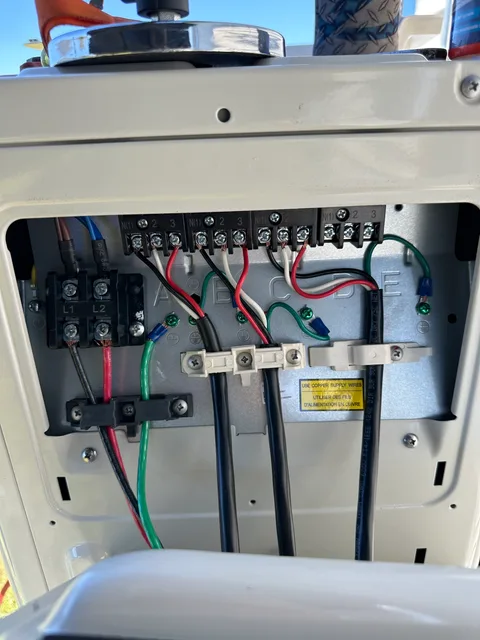
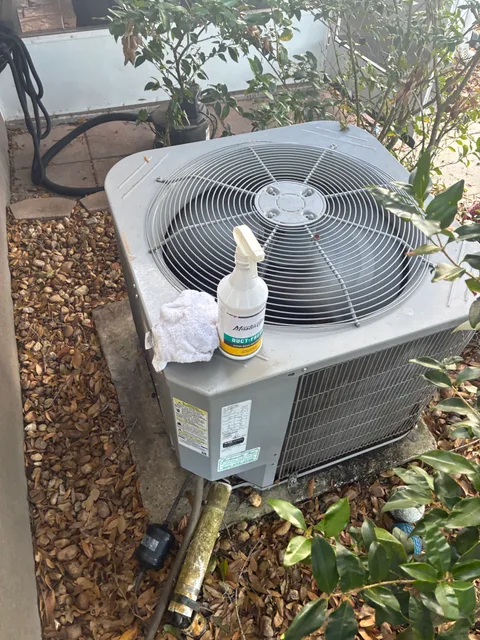
A changeout inspection is not a formality and it is not about the brand of equipment. The inspector is checking the things that hurt people and houses. Is there a properly rated disconnect within sight of the outdoor unit and is the wire sized and protected correctly. Is the equipment secured and elevated the way our flood and storm requirements call for, rather than sitting on a couple of pavers. Is the condensate handled properly, with a secondary drain or an emergency pan and a working float switch under an air handler that sits above finished ceilings. Are the required service clearances there so the next technician can actually work on it. Is the line set supported and sealed and are the penetrations weatherproofed. Every one of those is an item we see done wrong on unpermitted installs, and the float switch is the one that turns into a five figure water damage claim in a Florida attic.
Verify the license yourself before you sign anything, and do it in thirty seconds rather than taking a business card at face value. The Florida Department of Business and Professional Regulation runs a free public license lookup. Search the company name and confirm the license is active, that it is an air conditioning contractor license, and that the name on the license matches the name on your contract. A general handyman registration is not an HVAC license. Ours is CAC#1818177 and you are welcome to look it up before you call us. Any contractor who reacts badly to being asked for a license number has answered your question.
Florida Law Already Decided Who Loses
Florida Statute 489.128 says that a contract entered into by an unlicensed contractor is unenforceable as a matter of public policy, and that no lien or bond claim exists in favor of that contractor. People usually read that as good news for the homeowner, and in a narrow sense it is, because he cannot lien your house. But run it forward. The same reasoning that makes his contract unenforceable makes his warranty worth nothing. When your compressor fails in year three and the company has folded or simply stops answering, there is no license for you to file a complaint against and no recovery fund behind it. Statute 489.127 makes unlicensed contracting a first degree misdemeanor, and a violation committed during a state of emergency declared by the Governor is a third degree felony, which is worth remembering in August and September when storm chasers show up in Pasco and Hernando neighborhoods.
The Manufacturer Warranty Quietly Disappears
This is the one that stings the most because it is invisible on day one. Every major equipment manufacturer conditions its parts warranty on installation by a licensed contractor and registration of the equipment within a set window after installation, usually sixty to ninety days. An unlicensed installer cannot register your equipment, and in many cases will not bother. Two years later you have a warranty claim on a compressor, the manufacturer looks up the serial number, and finds either no registration at all or a registration that reverts to the short base warranty period instead of the ten years you believed you had. The homeowner then pays full price for a part that should have been free. We register every system we install and we hand you the confirmation.
It Surfaces Again When You Sell
Unpermitted work does not stay buried. Both counties keep permit records searchable online, and buyers, agents, and appraisers do search them. When a buyer's inspector notes a 2023 air handler and the county has no mechanical permit on the property from 2023, it becomes an open item on the contract. Depending on the situation the resolution can involve applying for an after the fact permit, which typically costs more than the original would have, and having the work brought up to current code before it can be signed off. Anything the original installer did wrong is now yours to correct, on a closing timeline, at your expense. We have watched this delay closings in Hudson and Spring Hill more than once, and it connects directly to the four point inspection problem we wrote about earlier this month, because a system with no permit history is a system whose age the inspector cannot verify.
How to Check What Happened at Your Own House
If your system was replaced before you bought the home, or you are simply not sure, you can find out without calling anybody. Both Pasco and Hernando publish permit records by address through their building department websites. Search your address, look for a mechanical permit around the year your equipment was manufactured, and check whether it shows a final inspection approved. If a permit exists and was finaled, you are in good shape and you should save a copy in the same folder as your invoice and warranty. If nothing is there, you have not done anything wrong and nobody is coming after you, but you now know two useful things: your warranty status is worth verifying with the manufacturer, and this will come up when you sell.
What a Permitted Job Should Look Like From Your Side
You should be able to see it happen without asking. The written quote names the exact equipment by model number and states that the permit and inspection are included. The permit is applied for before the install date and the permit card or number is available to you. The install happens, and then a county inspector comes out on a separate day, which means a permitted changeout has a second visit built into it. You get the final approval, the manufacturer warranty registration confirmation, and a paid invoice listing model and serial numbers for both units. That package is what you hand your insurance agent, your appraiser, and eventually your buyer. If a contractor cannot describe that sequence to you on the phone, keep calling.
Red Flags on an AC Replacement Quote
We pull the permit on every changeout, we meet the inspector, and we hand you the final approval with your paperwork. That is not a feature we charge extra for, it is what a licensed AC installation is. If you have quotes in hand and one of them is telling you the permit is optional, send them to us and we will walk through the differences line by line with no pressure. We serve Port Richey, New Port Richey, Trinity, Hudson, Spring Hill, Brooksville, and the rest of Pasco and Hernando County under license CAC#1818177. Office number is 727-327-7355 and a real person picks up.