A villa owner in Spring Hill called us in July with a quote in her hand from another company and one question. Her neighbor two doors down had replaced his system the previous summer, and the association had made him move the new condenser and rebuild the pad afterward at his own cost. She wanted to know whether that was going to happen to her. It is a better question than most people think to ask, and the answer is not in Florida law. It is in a document she had been given at closing eleven years earlier and had never opened. In a villa, a condo, or almost any deed restricted community in Pasco and Hernando County, the line between what you own and what the association owns runs directly through your air conditioning system, and knowing where it falls before you sign is worth real money.
The Documents Decide, Not the State
There is no Florida statute that says who replaces the air conditioner in a villa. Chapter 718 covers condominiums and Chapter 720 covers homeowners associations, and both of them mostly point back at the community's own governing documents. That means the declaration of condominium or the declaration of covenants for your specific community is the controlling text, and two communities on the same road in Spring Hill can have opposite rules. The general pattern across this area is steady enough to plan around. Equipment that serves only your home is yours, including the condenser, the air handler, the line set, and the thermostat. The structure that equipment sits on, passes through, or is attached to is often the association's, including the roof, the exterior wall, the slab, and any shared chase. The disputes almost always happen exactly where those two things touch. There is one more layer worth knowing about. Many villa declarations describe a category called limited common elements, which are parts of the property that the association owns but that only your unit is allowed to use. A condenser pad beside your wall is very often exactly that, which is why it can feel like yours and legally not be.
Find Out Which of the Three Situations You Are In
Before anything else, work out what you actually bought. In a detached home inside an HOA, you almost certainly own the whole system and the ground under it, and the association's interest is limited to how it looks from the street. In an attached villa, you usually own the interior and the equipment, while the exterior walls, roof, and often the concrete pad belong to the association or are common elements you have exclusive use of. In a condominium, ownership often stops at the interior surfaces of your walls, which means your air handler may sit in a closet you own while the condenser sits on a roof you do not. Each of those three creates a different replacement conversation. The word on your deed, whether it says lot, unit, or parcel, is usually the fastest clue.
Where the Condenser Sits Is the Whole Argument
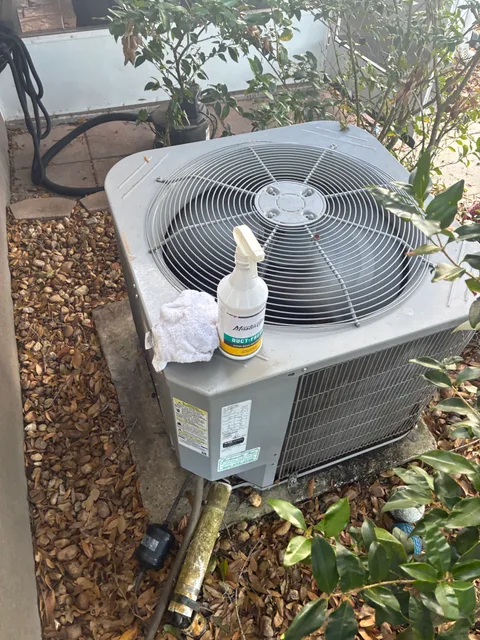
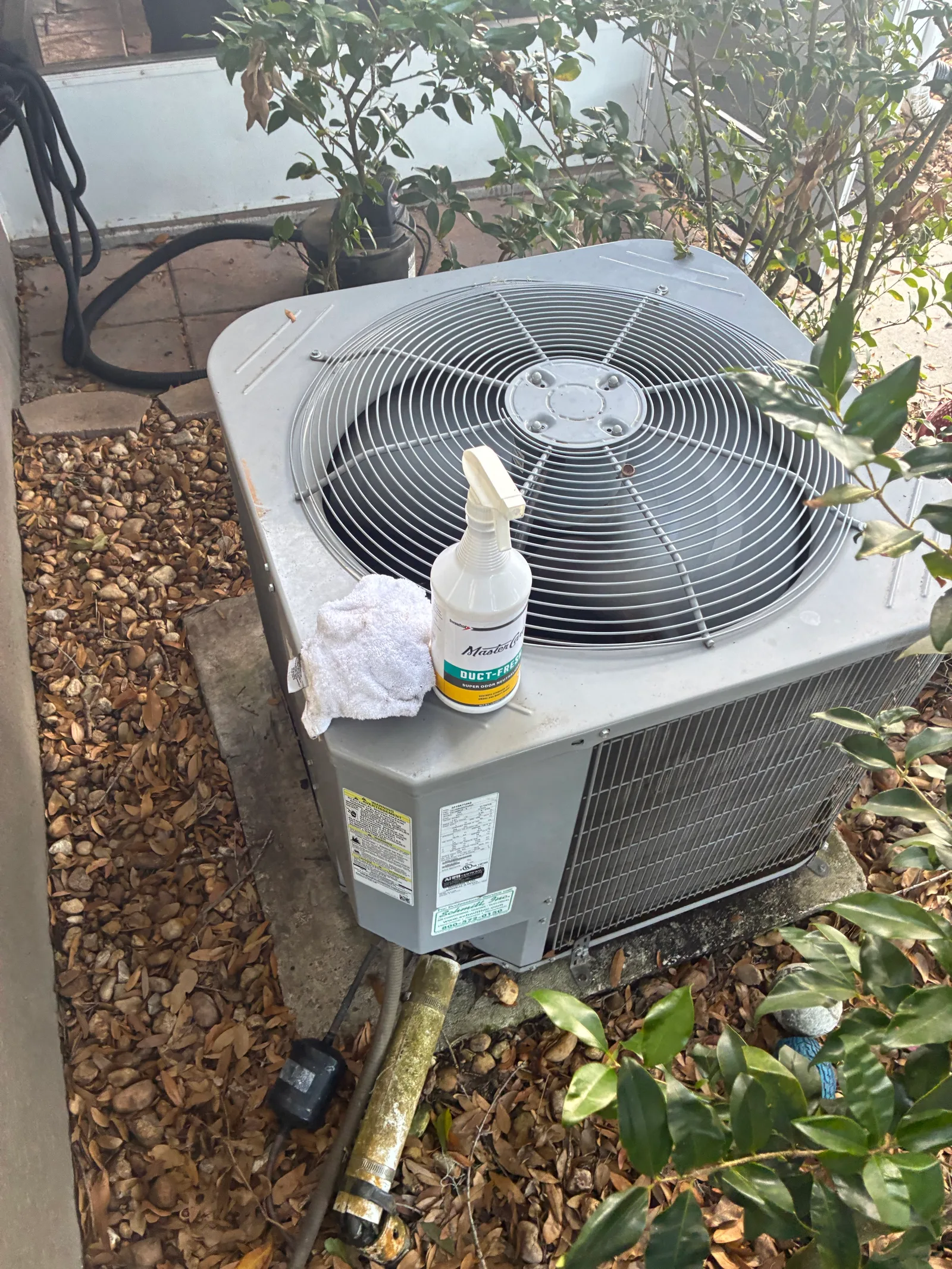
Almost every villa dispute we get called into comes down to the outdoor unit and the few feet of ground it occupies. New equipment is rarely the same footprint as equipment from fifteen years ago. Modern condensers are often taller, sometimes wider, and current installation practice raises them higher off the ground than the old pads did. So a like for like replacement quietly becomes a change to the exterior appearance of a building the association is responsible for maintaining. That is what happened to the neighbor two doors down. Nobody objected to him replacing his air conditioner. The association objected to a larger unit sitting on a rebuilt pad two inches outside the original footprint, in view of the street, without anyone asking first. The equipment was never the problem. The concrete was. A useful habit before you sign anything is to take a photograph of the existing unit on its pad, with something in frame for scale. If a question comes up later about what changed, that picture settles it in seconds.
Ask your management company for two documents before you take a single quote, and ask by email so you have the reply in writing. The first is the section of the declaration covering who maintains what for air conditioning equipment. The second is the architectural review request form, if one exists. Most management companies will send both within a day or two and neither costs anything. Having them in hand changes the quotes you receive, because a contractor who knows the pad and placement rules up front prices the job correctly the first time instead of discovering the restriction on install day with a crew standing in your driveway.
Architectural Review Is Usually Routine and Occasionally Slow
Many communities in this area require an architectural review request for anything that changes the exterior, and a condenser swap often qualifies even when the change is small. The good news is that these requests are approved most of the time, because an association has little reason to stop a homeowner from maintaining their own home. The problem is timing. Some boards meet monthly, and a request submitted the week after a meeting can sit for four weeks before anyone looks at it. In July, in Florida, with a dead system, four weeks is not a waiting period anyone can accept. This is the single best argument for replacing a system that is clearly near the end of its life on your schedule in the spring rather than on an emergency basis in August.
Screening, Noise, and the Rules That Are Easy to Miss
Beyond placement, deed restricted communities commonly carry three requirements worth checking. The first is screening, meaning hedging, lattice, or a low wall hiding the unit from the street, and if screening exists today you will generally be required to restore it. The second is a clearance rule that conflicts with the screening rule, because equipment needs airflow around it, and a condenser boxed too tightly runs hot and dies early. The third is noise, which shows up in villa communities where units sit close to a neighbor's bedroom wall. That last one is usually solvable with equipment selection rather than argument, since variable speed condensers run noticeably quieter than older single stage units and often satisfy a noise concern without anything being relocated.
Roof Mounted Equipment and Condo Closets
Condominium buildings introduce a harder version of the same split. If your condenser sits on a flat roof, that equipment is usually yours while the roof membrane under it belongs to the association, and everything about the job runs through them. Roof access, crane or hoist staging, curb and penetration details, and the warranty on any patch all become association matters. There is a scheduling issue here too. If the building has a roof replacement coming, doing a rooftop changeout six months earlier can mean paying to move the same unit twice. It is always worth one email to the manager asking whether a roof project is planned before you commit, and that single question has saved owners in this area real money.
What the Association Will Not Pay For, Even When It Owns the Pad
Owners sometimes read the maintenance section, see that the association is responsible for the slab or the exterior wall, and conclude that the association is buying part of the air conditioner. That is almost never how it works. Responsibility for maintaining a structural element is not the same as paying for work you requested to your own equipment. If a new unit needs a larger pad, the pad is usually yours to pay for even where the association maintains the original. The practical rule is straightforward. The association maintains the building. You pay for changes driven by your equipment. Reading it that way in advance prevents the most common villa surprise we see, which is an owner who budgeted for a system and not for the concrete, the electrical disconnect, and the restored screening around it.
The Sequence That Keeps You From Paying Twice
Run it in this order and the whole thing stays boring. Request the maintenance section and the architectural form by email. Get quotes that state the equipment dimensions and whether the existing pad and electrical will be reused. Submit the review request with those dimensions attached, before scheduling. Get the approval in writing and keep it with your closing documents. Then let the contractor pull the county mechanical permit, because the association approval and the building permit are two separate things and neither one substitutes for the other. When the work is finished you should hold three pieces of paper: the association approval, the finaled county permit, and the manufacturer warranty registration. That set is what protects you at resale, and it is exactly what the next buyer's inspector will ask about. Keep all three together in one folder rather than filed separately. When you sell, the request for them arrives with a short deadline attached, and hunting for a four year old approval letter under time pressure is a bad afternoon.
Red Flags on a Villa or Condo AC Quote
Common Questions
Who pays for AC replacement in a Florida villa or condo?
In almost every case the unit owner pays for the equipment that serves only their home, including the condenser, air handler, and line set. The association is usually responsible for the structure the equipment sits on or passes through, such as the roof, the slab, or a shared chase. The governing documents control, and they differ from one community to the next.
Do I need HOA approval to replace my air conditioner?
Usually yes if anything visible changes, including the condenser location, the pad, the screening, or a roof penetration. Many communities in Pasco and Hernando require an architectural review request before work begins, even for a like for like changeout. Approval is generally routine, but starting without it is what causes problems.
Can an HOA tell me which AC brand or contractor to use?
An association can require that the contractor be licensed and insured, can require a certificate of insurance naming the association, and can set standards for placement, screening, and noise. Requiring one specific brand is less common. A rule that you use one named vendor is worth reading carefully in the declaration before you accept it.
Who is responsible for a rooftop AC unit in a condo?
The equipment is usually the owner's and the roof is usually the association's. That split matters when a roof is replaced or a leak appears, because coordinating a crane or roof access usually runs through the association even though the unit belongs to you. Confirm the split in writing before scheduling any rooftop changeout.
Who should I call for AC replacement in a Timber Pines or Gulf Harbors villa?
Use a licensed Florida contractor who has worked inside deed restricted communities and will handle the architectural review paperwork with you. Farrell Air Conditioning, license CAC#1818177, replaces systems throughout Spring Hill, Brooksville, Port Richey, New Port Richey, Trinity, and Hudson, including villa and condo communities with approval requirements.
We work inside villa and condo communities across Spring Hill, Brooksville, Port Richey, New Port Richey, Trinity, and Hudson all year, and we are used to the paperwork. We will give you equipment dimensions in writing for your architectural request, price the pad and disconnect honestly instead of leaving them off to look cheaper, and pull the county permit for the AC installation the way it is supposed to be done. If your association turns out to have no restriction at all, we will tell you that and get on with it. Farrell Air Conditioning holds Florida license CAC#1818177. Office number is 727-327-7355 and a real person picks up.