A tenant off Hicks Road in Hudson called us on the eleventh day of August with the house at 89 degrees and a baby in it. She had been texting her landlord for a week and a half. He had told her, more than once, that Florida does not require him to provide air conditioning at all, so she should be grateful he was looking into it. Here is the uncomfortable part. On that one narrow point, he was correct. Here is the part he left out. It did not matter, because the law that mattered to her situation was a different one, and it had already started running against him. This is the most misunderstood corner of renting in Florida, and both sides usually have it wrong.
Florida Really Does Not Require a Landlord to Provide AC
Florida Statute 83.51 is the section that spells out what a landlord has to maintain, and it is worth reading once because it is short and it is not what people assume. It requires running water, hot water, and heat during winter. It does not require cooling. There is no statewide habitability rule in Florida that says a rental must have working air conditioning, which is strange in a state where August indoor temperatures put people in the hospital, but that is the law as written. So when a landlord says he is not obligated to give you air conditioning, he is quoting the statute accurately. The mistake almost everyone makes, landlords included, is stopping the sentence there. The same statute keeps going, and the next part is the one that decides nearly every real dispute.
If It Was There When You Moved In, He Has to Keep It Running
The obligation that actually applies is the duty to maintain what was supplied. Florida Statute 83.51 requires a landlord to keep the appliances and facilities furnished with the rental in good and safe working order. Air conditioning is not required to be provided, but the moment it is provided it becomes a supplied facility, and supplied facilities have to be maintained. It does not have to be named in the lease. If a working system was in the house on the day the tenant took possession, it was part of what the tenant rented and part of what the rent pays for. That is why the Hudson landlord lost the argument he thought he was winning. Nobody made him install air conditioning in that house. Somebody did install it, the tenant moved in with it working, and from that point forward keeping it working was his job and not hers. The same logic applies to a window unit the owner left behind, a mini split added to a converted garage, or a thermostat that came with the house. If it was there and working on day one, it is part of the deal.
The Seven Day Clock Most Tenants Never Start
Florida Statute 83.56 is the tenant's actual leverage, and it runs on written notice. A tenant delivers written notice describing the problem, and the landlord then has seven days to make a reasonable effort to correct it. If that window closes with no reasonable effort, the tenant has options that can include terminating the lease. The detail that undoes most tenants is the word written. Eleven days of text messages asking when somebody is coming does not reliably start the clock, and neither does a voicemail. A dated letter that says the air conditioning is not cooling, that the tenant is requesting repair, and that is delivered in a way you can prove, does start it. Hand delivery with a photo of it, certified mail, or email where the lease allows email notice all work. Keep a copy. The copy is the whole point. One more detail worth knowing. The seven days are counted in a way that skips the day you deliver the notice, so a letter handed over on a Monday does not run out on the following Monday. If you are close to the edge of that window, count carefully rather than guessing, because the whole remedy rests on the notice being valid.
If you are a tenant, take one photo before you write anything. Photograph the thermostat showing the set temperature next to the actual indoor temperature, with the date visible if your phone overlays it. That single image does more work than three paragraphs of description, because it converts a complaint into a documented condition. Do the same thing every two or three days while you wait. If the situation ever reaches a property manager, a mediator, or a judge, a dated series of photos showing 88 and 89 degrees inside a house is not something anyone can argue with, and it costs you nothing to build.
When the Tenant Really Is the One Who Owes for It
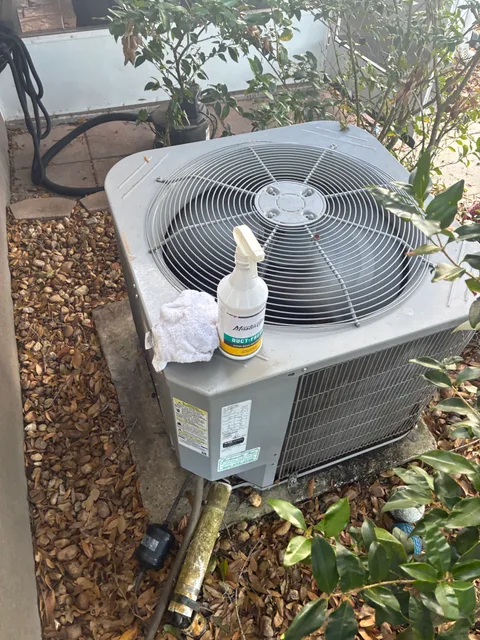
This cuts both ways and we are not going to pretend otherwise. The landlord's duty covers normal wear and failure. It does not cover damage a tenant caused, and in our service calls that distinction is usually visible within about ten minutes. A condensate drain packed solid because the filter was never changed in two years is a maintenance failure sitting on the tenant's side of the line. So is a system running with the outdoor coil buried in shrubs or blocked by stacked furniture, a thermostat set to 65 in a house that cannot reach it, or a breaker that keeps getting reset instead of investigated. A capacitor that failed at year nine, a compressor that gave out, or an evaporator coil that leaked is normal component failure and belongs to the owner. We write down which one it is, because guessing helps nobody.
Why We Cannot Just Fix It When a Tenant Calls
Tenants are sometimes frustrated with us over this, and the frustration is fair, so here is the honest reason. The equipment belongs to the property owner. A licensed contractor cannot perform and bill repair work on equipment owned by somebody who has not authorized the work, and a tenant cannot authorize a repair to a system they do not own. What a tenant absolutely can do is call us, let us in, and pay for a diagnostic visit. We will tell you exactly what failed, what it costs to fix, and whether it is a wear item or a misuse item, and we will put all of it on paper with the date on it. That document is worth far more than another unanswered text message, because it turns a vague dispute into a specific number that an owner can act on.
For Owners: The Cheap Answer Is Usually the Expensive One
If you own rental property in Pasco or Hernando County, the math on delay is worse than it looks. A tenant sitting in a hot house is a tenant documenting a hot house, and a lease that gets terminated under Statute 83.56 costs you a turnover, a vacancy, and a make ready far beyond the price of a capacitor or a fan motor. There is a second cost that is easy to miss. Running a struggling system for eleven days in August is how a repairable problem becomes a replacement. A compressor asked to run continuously against a failing component often does not survive the wait. The repair you avoided on day one often reappears as a full system quote in the same month, and now it is an emergency changeout in peak season rather than a scheduled one.
What the Lease Can and Cannot Change
Leases in this area increasingly try to push maintenance onto the tenant, and some of that is enforceable while some of it is not. A clause making the tenant responsible for changing filters is common, reasonable, and generally holds up, and honestly it is good for the equipment. A clause making a tenant responsible for the first hundred dollars of any repair appears often and is often enforced. What a lease cannot do is waive the landlord's underlying statutory duty to maintain supplied facilities in good working order. If you are a tenant and your lease appears to sign that duty away entirely, that clause is worth having someone look at rather than accepting at face value. If you are an owner, a clause a court will not enforce is not protection, it is a delay that ends with you paying anyway.
How the Hudson Situation Actually Ended
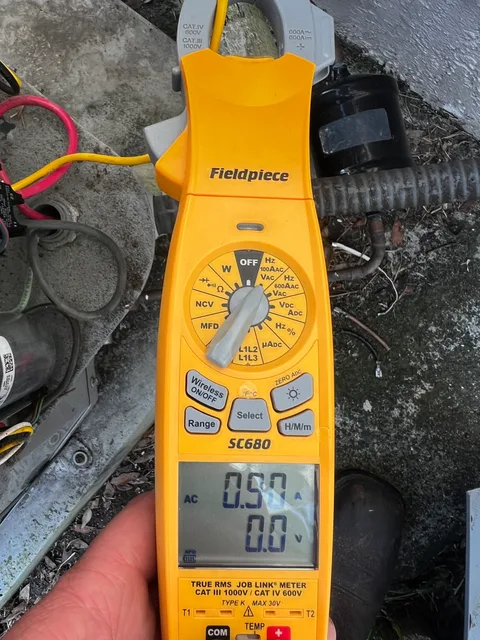
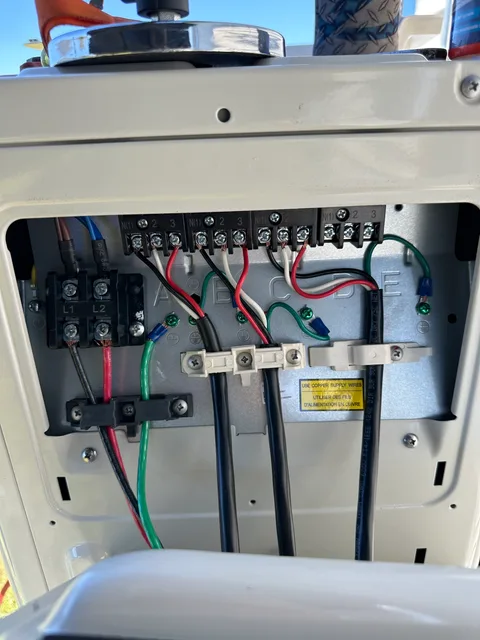
She paid us for a diagnostic. It was a failed run capacitor and a contactor with burned contacts, which is a common and inexpensive pair of parts, and the whole repair was well under three hundred dollars. We wrote it up with the date, the parts, the price, and a line noting the filter was clean and the coil was clear, which removed any argument that she had caused it. She emailed that report to her landlord that afternoon with a short written repair request. He approved the work the next morning. The eleven days were not caused by the cost, because the cost was trivial. They were caused by nobody being able to say what the number actually was, and a piece of paper solved that in a single afternoon. We have watched the same pattern play out in Port Richey and Spring Hill more times than we can count. The dispute is almost never really about money. It is about two people guessing at a number neither of them knows, and guessing badly in opposite directions.
Signs a Rental AC Dispute Is About to Get Expensive
Common Questions
Does a landlord have to provide air conditioning in Florida?
No. Florida Statute 83.51 requires a landlord to provide running water, hot water, and heat during winter, but cooling is not on that list. However, if air conditioning was supplied with the rental or was working when the tenant moved in, the landlord must keep it in good and safe working order under the same statute.
How long does a landlord have to fix the AC in Florida?
Under Florida Statute 83.56, a tenant gives written notice and the landlord then has seven days to make a reasonable effort to repair. If that window passes without a reasonable effort, the tenant may have grounds to terminate the lease or pursue a rent remedy. The seven days runs from delivery of written notice, not from a phone call.
Can a tenant be charged for AC repair in Florida?
Yes, when the failure was caused by the tenant's own negligence or misuse rather than normal wear and tear. Common examples are a condensate drain clogged because filters were never changed, or damage from running the system with the outdoor unit blocked. Normal component failure remains the owner's responsibility.
Who authorizes AC repair on a rental property?
The property owner or their designated manager authorizes and pays for the work. A tenant can request service and let a technician in, but a licensed contractor cannot bill repairs to someone who does not own the equipment. Farrell Air Conditioning documents the diagnosis in writing so a tenant has something concrete to send the owner.
Who should I call about a broken AC in a Pasco or Hernando rental?
Start by putting the request in writing to the landlord or property manager and keeping a copy. Farrell Air Conditioning, license CAC#1818177, services rental properties throughout Port Richey, New Port Richey, Hudson, Trinity, Spring Hill, and Brooksville, and provides written diagnostic reports that owners and tenants can both rely on.
Whether you own the property or rent it, the fastest way out of a stalled AC dispute is a written diagnosis with a real number on it. We service rental properties across Port Richey, New Port Richey, Hudson, Trinity, Spring Hill, and Brooksville, we document what failed and why, and we are comfortable talking to a tenant and an owner in the same afternoon. If the fix turns out to be a straightforward AC repair we will say so, and if the system is genuinely finished we will say that instead. Farrell Air Conditioning holds Florida license CAC#1818177. Office number is 727-327-7355 and a real person picks up.