A homeowner in a community off Old Dixie Highway in Hudson had two quotes and a problem she could not name. Both companies had walked the outside of the home, measured nothing indoors, and quoted a standard split system with an indoor air handler. She had lived there nineteen years and knew there was no closet, no attic, and no place an air handler had ever been. Her existing unit was a single cabinet sitting outside, blowing straight up through the floor. Neither salesperson had mentioned that. Pasco County has well over a hundred manufactured home communities, most of them concentrated around Hudson and Port Richey, and air conditioning in these homes is genuinely a different product category with different rules. Getting that wrong is expensive, and it happens constantly.
A Manufactured Home Is Not a Small Site Built House
Manufactured homes are built to a federal construction standard rather than to the same code that governs site built homes, and nearly everything about the mechanical system follows from that. Equipment installed in one generally needs to be listed for use in manufactured housing, which is a real certification and not a marketing phrase. The duct system does not run through an attic. It runs under the floor, inside the insulated belly wrap, in a shape and size that was decided at the factory decades ago. The return air path is often a single central grille rather than returns in multiple rooms. The electrical service is often smaller than what a modern home carries. Any one of those would change how a system is selected. Together they mean a quote written from a walk around the outside is a guess.
Find Out What You Have Before Anyone Quotes You
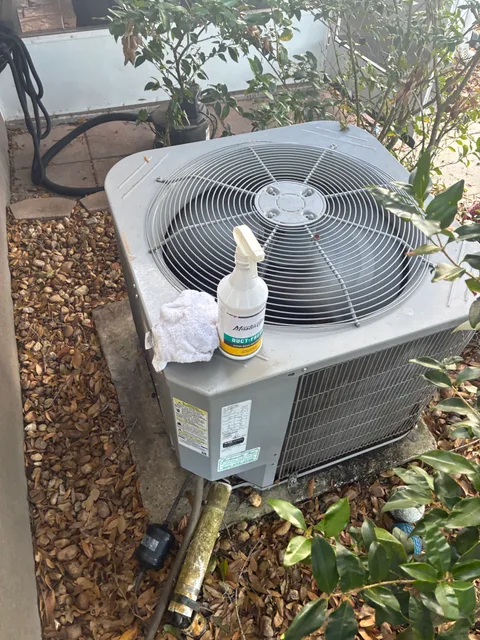
There are two common arrangements and they are not interchangeable. A package unit holds the compressor, the coil, and the blower in one outdoor cabinet, and it connects to the home through the floor or through an end wall. A split system puts a condenser outside and an air handler somewhere inside or underneath. Most older manufactured homes in this area were built around package units because there is no attic and no mechanical closet to put an air handler in. Walk outside and look at the cabinet. If it is a single box roughly the size of a chest freezer with a large duct connection going into the home, you have a package unit. If you have a condenser outside and a separate tall cabinet in a closet or under the home, you have a split. Say which one you have on the phone, and the conversation improves immediately. If you cannot tell, take a photo of the outdoor cabinet and the data plate on its side and send it over. The model number tells us what we are working with before anyone drives out, and it costs you nothing.
The Ducts Under the Floor Are the Real Story
This is the part almost nobody inspects and it is the part that decides whether you are happy afterward. In a manufactured home the supply ducts run under the floor inside the belly wrap, a fabric or board underbelly holding the insulation in place. After twenty or thirty years in Florida that underbelly commonly sags, tears, or opens where animals have gotten in, and the ducts inside it separate at joints, crush where something has pressed on them, or disconnect entirely. When that happens the system is cooling the crawl space. The homeowner feels weak air at the far bedroom, assumes the air conditioner is too small, and buys a bigger one. The bigger one moves more air into the same broken duct, the far bedroom is still warm, and the money is gone. Anyone quoting a system for a manufactured home should be looking under it first. The repair itself is usually not dramatic. Reconnecting separated joints, sealing them properly, and restoring the underbelly is ordinary work, and it very often costs less than the difference between the two equipment sizes people get talked into comparing.
Before you take quotes, do one thing that costs nothing. Turn the system on, go to the furthest room from the unit, and hold your hand at the supply register. Then do the same at the register closest to the unit. If the far one is noticeably weaker, tell every contractor who comes out, and ask each of them specifically what they intend to do about the duct under the floor. The ones who have an answer have worked on manufactured homes. The ones who change the subject back to equipment have not, and their quote is likely to leave you with the same complaint you have today plus a payment.
Bigger Is Worse Here, Not Better
Oversizing hurts in any Florida home, and in a manufactured home it hurts faster. These homes are fairly small, and the duct they were built with was sized for the equipment they came with. Put too much capacity on that duct and two things happen at once. The system satisfies the thermostat in a few minutes and shuts off before it has pulled meaningful moisture out of the air, so the home ends up cold and damp rather than comfortable. At the same time the blower is trying to push more air than the original duct can carry, which raises static pressure, strains the motor, and shortens the life of the equipment you just bought. The right answer is a correctly sized system on repaired duct, and it is usually less money than the oversized one.
Check the Electrical Service Before You Fall in Love With a System
Manufactured homes in this area often carry a smaller electrical service than a site built home of similar age, and the service is often fed from a pedestal beside the home rather than from a meter on the wall. That matters in two ways. A larger system, or one with electric heat strips added, can push the load past what the existing service and panel are built for, which turns an air conditioning job into an electrical job. Separately, the disconnect at the pedestal and the wiring between the pedestal and the unit have usually been outdoors for decades in salt air and are often corroded. A quote that does not mention the disconnect is a quote that has not looked at it, and that is a change order waiting to happen on install day.
The Permit Applies Here Too
There is a persistent belief in manufactured home communities that permits do not apply, and it is not correct. A mechanical permit and a county inspection are required for an air conditioning changeout on a manufactured home in both Pasco and Hernando County, and pulling it is the licensed contractor's job rather than yours. The inspection matters more here than most places, because the items an inspector checks are precisely the ones that go wrong on these installations: a properly rated disconnect within sight of the unit, correct wire sizing, the unit secured and elevated appropriately, and condensate handled so it is not simply dumping under the home. If you would like the longer version of what skipping that costs, we wrote about unpermitted AC work earlier this summer.
Community Rules Are a Second Approval
If you are in a leased lot community, and most manufactured home residents in Pasco County are, the community itself often has rules about equipment placement, the pad, screening, and where a crew may park and work. Some communities restrict work hours. Some require the contractor to carry insurance naming the community. None of this is difficult, but all of it is easier to handle a week before the installation than on the morning of it. Ask the office what they require and get the answer in writing. The county permit and the community approval are two separate things and neither one covers the other, which is the same trap villa owners fall into in Spring Hill.
When We Tell People Not to Replace It
Sometimes the honest answer is to spend less rather than more. If a package unit is eight or nine years old and the failure is a capacitor, a contactor, or a fan motor, repair it and put the difference toward the duct work under the floor, because that is where the comfort problem actually lives. If the home is one you are planning to sell within a year or two, a correctly sized standard efficiency system with a clean permit will serve you better at closing than a premium system you will not keep long enough to benefit from. And if the underbelly is badly deteriorated, fixing that first sometimes changes what size equipment you need, which means getting it done before the quote can save you money on the quote. We would rather tell you that now than sell you a system that does not solve your problem. None of that is a reason to put off a system that has genuinely reached the end. It is a reason to find out which situation you are actually in before you sign, because those two situations look identical from the driveway and cost very different amounts of money.
Signs a Contractor Has Not Worked on Manufactured Homes
Common Questions
Can you put a regular AC unit in a mobile home?
Usually not without changes. Equipment installed in a manufactured home generally needs to be listed for manufactured housing, and the duct system, return air path, and electrical service in these homes are sized differently than in site built homes. Standard residential equipment often will not physically fit or will run at a static pressure the blower was never designed for.
What is a package unit and why do manufactured homes use them?
A package unit contains the compressor, coil, and blower in one outdoor cabinet, and it connects to the home through the floor or an end wall rather than through an indoor air handler. Many manufactured homes were built for this arrangement because there is no attic or interior closet suited to a separate air handler.
Why is my mobile home AC not cooling the back bedroom?
In most manufactured homes the ducts run under the floor inside the belly wrap, and after twenty or thirty years those ducts commonly sag, separate at joints, or get crushed. Cooled air then leaks into the crawl space instead of reaching the far end of the home. Replacing the equipment without inspecting the belly ducts rarely fixes it.
Does a manufactured home AC replacement need a permit in Pasco or Hernando County?
Yes. A mechanical permit and inspection are required for an air conditioning changeout on a manufactured home the same as on a site built home, and the licensed contractor pulls it. Park or community approval may also be required for placement, and that is a separate matter from the county permit.
Who should I call for AC replacement in a Hudson or Port Richey manufactured home community?
Use a licensed Florida contractor who works on manufactured housing regularly and will inspect the belly ducts before quoting equipment. Farrell Air Conditioning, license CAC#1818177, services manufactured home communities across Hudson, Port Richey, New Port Richey, Spring Hill, and Brooksville.
We work in manufactured home communities across Hudson, Port Richey, New Port Richey, Spring Hill, and Brooksville every week, and we look under the home before we quote equipment. You will get the arrangement you actually have, a correctly sized system, the duct condition described honestly, and a permitted AC installation with the inspection included. If a repair is the smarter money this year, we will tell you that instead. Farrell Air Conditioning holds Florida license CAC#1818177. Office number is 727-327-7355 and a real person picks up.