A customer in Spring Hill called us on a Saturday in July after one of those four o'clock storms that shows up, drops an inch of rain in twenty minutes, and moves on. Her power had blinked twice. The lights came back. The refrigerator came back. The air conditioner did not. Nothing was scorched, nothing smelled burnt, and there was no dramatic story to tell an adjuster. Lightning had struck a pole a couple of streets away and the surge had walked down the line into her house. The compressor was fine. The outdoor fan motor was fine. The control board in the air handler was dead, and the board on a fourteen year old system took eleven days to source. Eleven days without air conditioning in July. The part that stays with me is that the whole thing was preventable for less than the cost of the service call she paid us for.
You Live in the Worst Place in America for This
Florida leads the nation in lightning by a wide margin, and the corridor running across the middle of the state from Tampa Bay toward Orlando gets the most of it in the country. That is us. Pasco and Hernando sit in it, and July and August are the peak of it, because the sea breeze off the Gulf collides with the one off the Atlantic almost every summer afternoon. What most homeowners misunderstand is that you do not need a direct hit to lose equipment. A direct strike on a house is rare and it is catastrophic. What actually takes out air conditioners here, dozens of times every summer, is a strike to a utility pole, a transformer, or the ground nearby, which induces a voltage spike that travels the power line into your panel. It can also come in with no lightning at all, from a transformer switching or the moment power is restored after an outage. That last one matters, because the utility restoring service after a storm is itself a surge event, and it is why so many systems die the moment the lights come back rather than when they went out.
What a Surge Actually Kills, and What It Leaves Alone
A surge does not usually destroy the whole system, and that is exactly what makes it expensive. It finds the delicate parts. The first casualty in almost every case is the control board in the air handler or furnace, which on a modern system is a small computer, and on many systems is a part that costs more than a thousand dollars installed and is frequently on backorder in the middle of summer. Next is the low voltage transformer, then the contactor, then the capacitor, then the thermostat, and on variable speed equipment the inverter drive, which is the single most expensive component in a high efficiency system. Meanwhile the compressor and the fan motors are heavy, rugged, inductive loads and they often come through untouched. So the failure looks strange from the outside. The unit is not damaged in any visible way. It simply will not turn on, and the repair estimate lands somewhere between eight hundred dollars and a number that makes you start pricing new systems.
Check What Your Warranty Covers
Read the warranty that came with your system before assuming a failed board is covered. Look for the terms on lightning, power surges, voltage problems and labor, and ask the manufacturer or installer to explain how they apply to the diagnosis. A parts warranty is not the same as a promise to cover every cause of failure. We explain any applicable coverage and the work that remains chargeable in your written repair option. Surge protection has its own product terms, too; it should not be described as a guarantee that storm damage cannot happen.
When the power goes out in a storm, walk over and switch your thermostat to OFF, and if you want to be thorough, pull the disconnect at the outdoor unit. Leave it that way until power has been back and steady for ten or fifteen minutes, then turn it on. The restoration moment is when a great deal of this damage happens, and a system that is switched off is a system that is not sitting there waiting to receive it. It costs you nothing and takes about twenty seconds. The same applies coming back from a trip, which ties into the settings we walk through in our guide for homeowners who leave Florida for the summer.
The Two Layers, and Why You Want Both
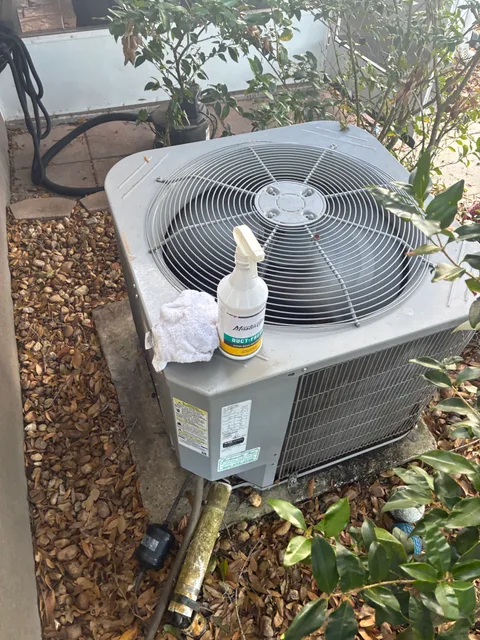
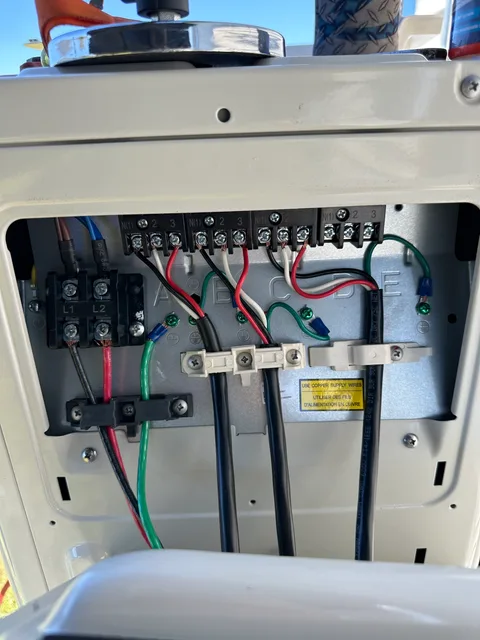
Surge protection is layered, and the vocabulary is simpler than it sounds. A whole home protector installs at your electrical panel or at the meter and it takes the big hit, clamping the voltage coming in off the utility before it reaches anything in the house. That is your first layer and it protects everything, the AC included, along with the refrigerator, the pool pump, the well pump, and the television. The second layer is a dedicated protector mounted right at the outdoor unit's disconnect, and it exists because the whole home device cannot clamp all the way down to zero and because a long run of wire out to the condenser can pick up induced voltage of its own. Two devices, two jobs. The panel device is electrical work and gets done by an electrician. The condenser device we install as part of an AC service call. If you can only do one, do the panel, because it covers the whole house. If you have a variable speed or communicating system with an inverter drive, do both without thinking about it.
What It Costs and What the Math Looks Like
Ask for a written estimate that names the surge-protection device and the installation work. A condenser-mounted device is a different scope from a whole-home device at the electrical panel, which should be quoted by a qualified electrician. Existing wiring, the disconnect or panel, mounting and access can all change the work. If a surge has already damaged the system, the failed board or drive must be identified before its replacement can be priced. Our AC repair cost guide explains diagnostic fees and selected repair scopes; it is not a fixed price for surge protection, a control board or panel work. Check the installed device according to its manufacturer instructions after a storm and ask about any indicator showing that replacement is needed.
What Your Homeowners Policy Will and Will Not Do
Lightning is a named peril on a standard Florida homeowners policy, so damage that can be traced to a lightning event is generally covered, subject to your deductible. Two things get in the way in practice. The first is that deductible. If your all other perils deductible is $2,500 and the repair is $1,100, you have coverage that does you no good. The second is causation, because a surge that came from utility switching or from a restoration event rather than from lightning is often treated as an excluded mechanical or electrical breakdown instead. If you do file, get a written diagnosis from your contractor that states the failed components and the suspected cause, keep the failed parts, and note the date and time of the storm. Also, and this connects to something we wrote about earlier this summer, filing small claims in Florida's current market has consequences at renewal, which is worth weighing against paying out of pocket. Our piece on how your AC affects your homeowners insurance covers that dynamic in detail.
Brownouts Are the Quiet Version of the Same Problem
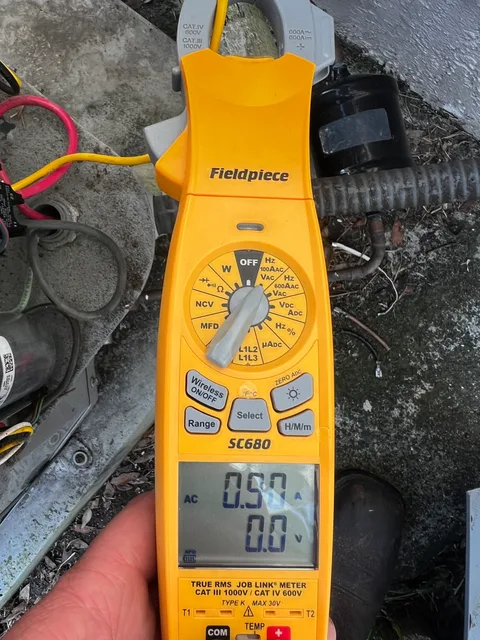
Surges get the attention because they are dramatic. Low voltage does more cumulative damage and nobody notices it happening. On an August afternoon when the entire grid is under peak air conditioning load, voltage can sag, and a compressor asked to start on low voltage draws far more current than it should to make up the difference. Do that a few hundred times and you have cooked the windings on a compressor that should have lasted another six years. This is why a hard start kit and a properly matched capacitor are worth more here than in most of the country, and it is why we look at incoming voltage on every maintenance visit rather than just checking the charge. If your lights dim noticeably every time the AC kicks on, that is worth a conversation. A surge protector does not fix that, and anyone who tells you it does is guessing.
What to Do in the Hour After a Storm Takes Your AC Out
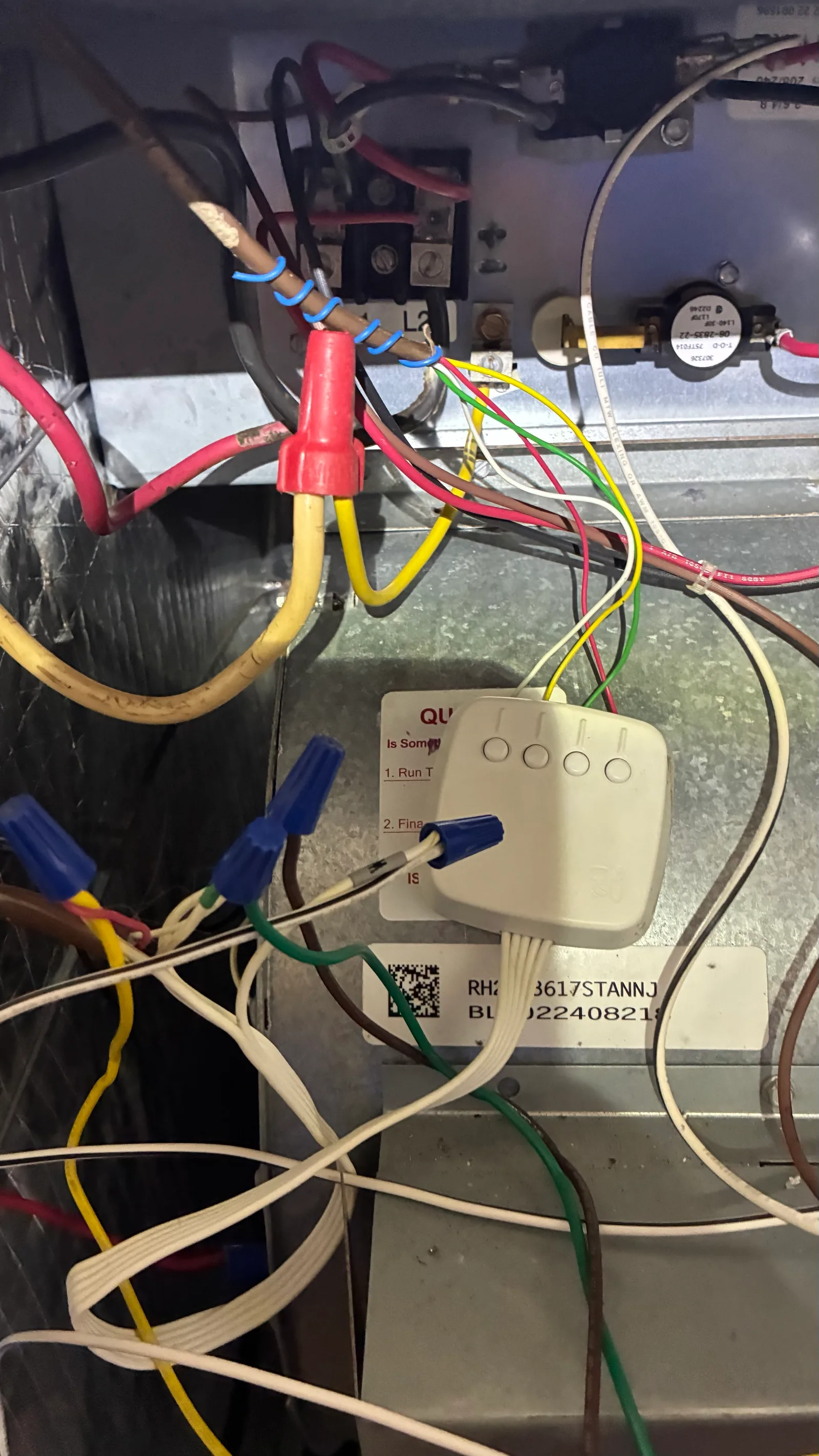
Start at the panel and check whether the AC breaker tripped, and if it did, reset it once. Once. If it trips again, leave it alone and call, because a breaker that keeps tripping is doing its job. Check the disconnect box outside and the little switch at the air handler, usually in the garage or a hall closet, since both get bumped. Look at your thermostat, because a blank screen after a storm is very often just a blown low voltage fuse or transformer, which is a small repair rather than a large one. Take a photo of the outdoor unit's data plate with the model and serial numbers before you call anybody, since it makes sourcing a part hours faster. And write down the date and time of the outage while you remember it, because if this does turn into an insurance conversation that detail matters more than you would think. Our full hurricane season AC checklist covers the bigger storm version of this.
Watch the video
Why Does My Thermostat Have No Display in Port Richey?
Goose from Farrell Air Conditioning in Port Richey, FL, answers a common homeowner question: "Why does my thermostat have no display?" A blank screen can mean your thermostat has lost power. In this quick video, Goose explains what could be happening and what it means for your AC system.
Signs You Took a Surge Hit
We install HVAC surge protection on service calls, on tune ups, and on every new system we install, and we will tell you honestly if your equipment is old enough that it is not worth the money. If a storm already got you, call and we will diagnose it properly and give you the written cause and component list you will need if you decide to file. We cover Port Richey, New Port Richey, Trinity, Hudson, Spring Hill, Brooksville, and the rest of Pasco and Hernando County under license CAC#1818177. Office number is 727-327-7355 and a real person picks up.