Atlantic hurricane season opened June 1 and runs through November 30. Across our service area in Port Richey, Spring Hill, and the surrounding Pasco and Hernando County communities, more AC systems get damaged by power surges, blown debris, and post storm flooding than by direct wind impact. Most of that damage is preventable with about an hour of prep work before the season ramps up. Here is the seven step checklist we walk through with every maintenance plan customer in May and June.
Why Storms Are So Hard on Florida AC Systems
Three things happen during and after a hurricane that an outdoor AC condenser was never designed to handle. First, power flickers and full grid restorations create voltage surges that can fry the capacitor, contactor, and control board in the outdoor unit. Second, wind picks up patio furniture, palm fronds, and roof debris and drives them into the condenser coils at high speed. Third, storm surge or yard flooding submerges the bottom of the unit, soaking the contactor and the fan motor windings. Each one of those events is a separate repair bill. Doing the seven steps below in advance prevents most of them.
Install a Whole House Surge Protector
A whole house surge protector installed at your electrical panel costs between four hundred and six hundred dollars and protects every appliance in the house, including the AC, from grid surges during storms. The most expensive component in your AC is the variable speed control board on modern systems. Replacing one runs eight hundred to two thousand dollars. A single big surge can take it out. The surge protector pays for itself the first time the grid comes back up with a spike. We install these for our Pasco and Hernando County customers as a planned upgrade or alongside any other electrical work on the AC system.
Clear and Secure the Yard Around Your Outdoor Unit
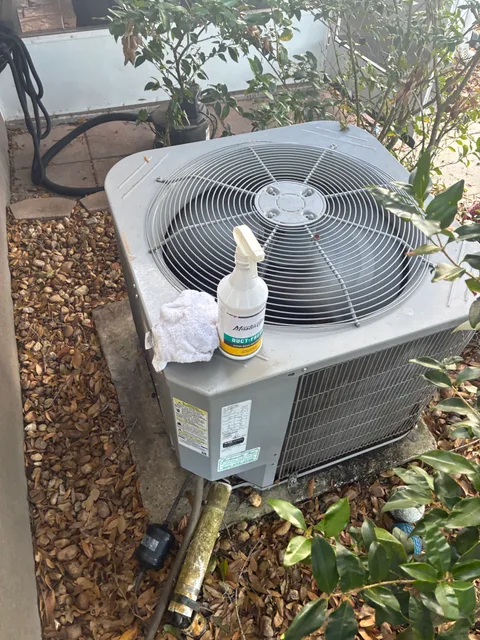
Walk a ten foot circle around your outdoor condenser. Move patio furniture, planters, kids toys, garden tools, and anything else that can become a projectile. Trim back palm fronds and branches overhanging the unit. The damage from a coconut driven by sixty mile per hour wind into an aluminum coil fin pack is the same damage as a fastball through a window. Coil fin damage reduces system efficiency and can puncture the refrigerant lines underneath. Once the first storm forecast goes up, the lawn care companies are booked solid. Do the trim work in May.
Do not wrap your outdoor unit in a tarp before the storm. Florida homeowners do this every year thinking it protects the coils, but a wrapped unit traps heat and humidity against the metal and accelerates corrosion. If you are evacuating and want to protect the top from falling debris, a small plywood cover on top of the unit (not wrapped around the sides) is the right approach. The sides need to breathe.
Locate Your AC Disconnect Switch
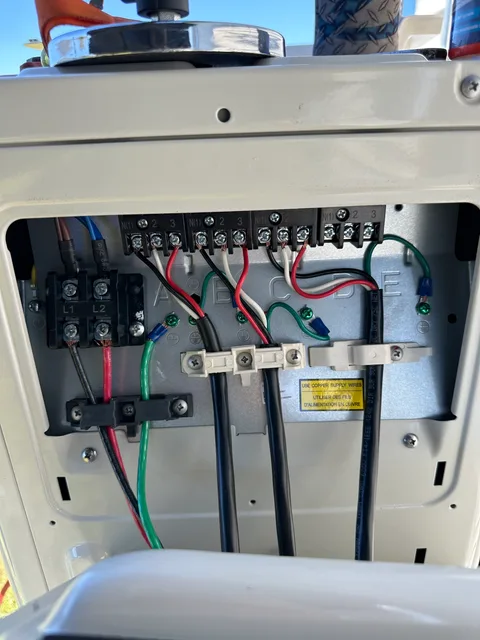
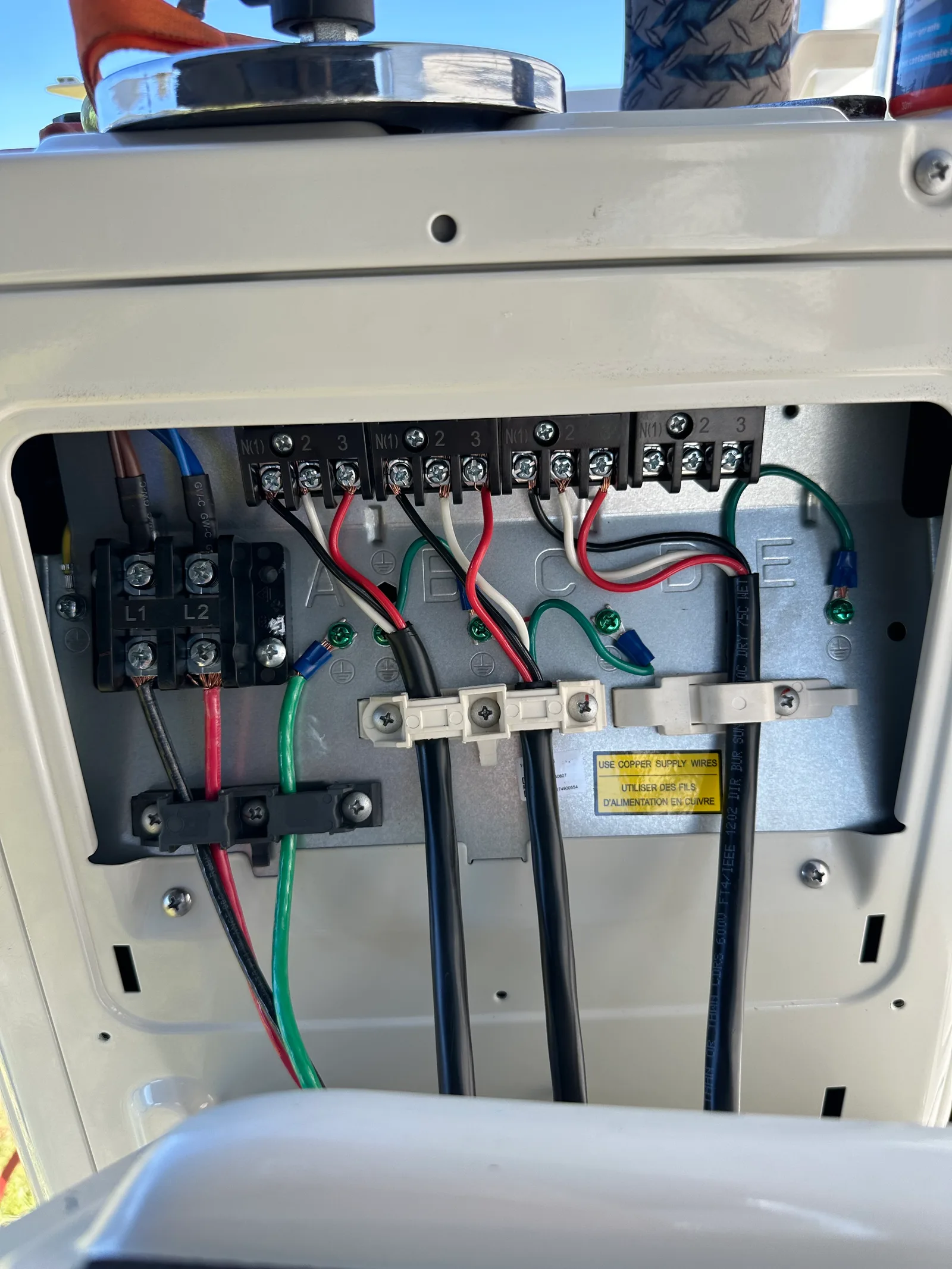
Every outdoor condenser has a disconnect box mounted on the exterior wall next to it. Pull the handle (or flip the switch) and the unit is fully de energized. When a named storm is within a day or two of your area, kill the power to your AC at the disconnect, in addition to turning the thermostat off. This protects against surges during the storm and during the chaotic power restoration that follows. Just remember to flip it back on when the storm passes and the grid is stable. Running a wet contactor during a power restoration is one of the most common ways condensers get damaged.
Check Your Unit Pad and Strapping
Florida building code in hurricane zones requires outdoor condensers to be strapped to the pad with hurricane rated tie down brackets. Older homes built before the current code, especially in original Spring Hill, Hudson, and the older Port Richey neighborhoods, sometimes have no straps at all. If your unit is just sitting on a concrete pad with no straps, in a major storm it can tip over or slide off the pad. Either one can damage the refrigerant lines and turn a mounting problem into a larger repair. Ask us to inspect the mounting and explain any needed retrofit. Brackets, anchors, pad condition, access and the required work determine the written estimate; a strap retrofit is not automatically included in a routine tune-up.
Cool the House Down Before the Power Goes Out
Twenty four hours before forecast landfall, drop the thermostat by three to four degrees and let the house pre cool to the lower setting. A well insulated home in Pasco County will hold below seventy eight degrees for ten to fourteen hours after the power goes out, which is usually enough to ride out the worst of the storm before you really start to feel uncomfortable. Then turn the AC off entirely and kill the disconnect about an hour before the worst winds arrive. Do not be tempted to leave it running through the storm to keep the house cool. Surges and flickers during a storm in progress are exactly what blow up the control board.
What to Do When the Power Comes Back
Do not turn the AC on the moment the lights come on. The first thirty to sixty minutes after grid restoration is when the most surge damage happens, as the utility balances loads back across the substation. Wait at least one hour. Then walk to your outdoor unit and look at it before re energizing. Confirm there is no obvious damage, no standing water in the cabinet, no debris jammed in the fan blades. Flip the disconnect back on, then set the thermostat to cool. If anything sounds wrong, smells wrong, or the unit will not start, turn the disconnect back off and call us. Running a damaged system can compound the damage fast.
If Your Unit Was Submerged, Stop and Call
If your outdoor condenser was even partially under water during storm surge or yard flooding, do not turn it back on. Water in the electrical compartment can cause a short circuit on startup that will damage components beyond repair. The right call is to leave the disconnect off, take a photo of the water line on the unit (useful for insurance), and call us out for an inspection. We will pull the panel, dry the components, check the contactor and capacitor, and tell you what is salvageable. Insurance carriers often cover storm related AC damage when it is documented and inspected by a licensed contractor before any restart attempt.
After the Storm: Do Not Restart If You See These
The best hurricane AC prep happens in May and June, before the first cone shows up on TV. If you would rather have us assess the system before a storm, tell the office what you want checked when you book. Our AC tune-up guide explains the routine visit and its current pricing. Strap retrofits, surge protection and other storm-preparation work need a separate stated scope and written estimate. A maintenance plan includes its scheduled routine visits; it does not automatically include every storm-prep task. Call our office at 727-327-7355 to book. A real person picks up.