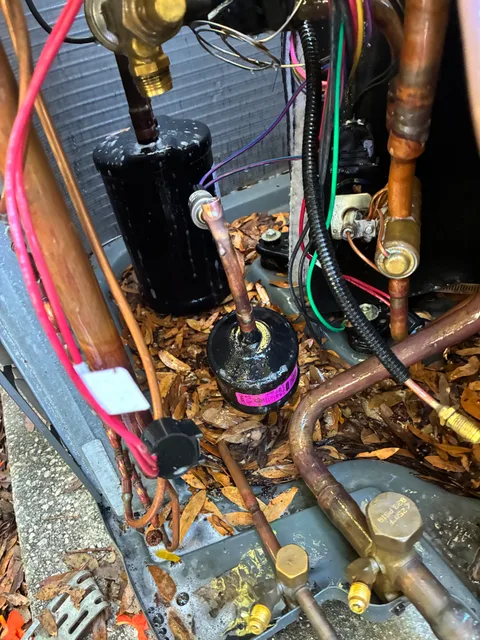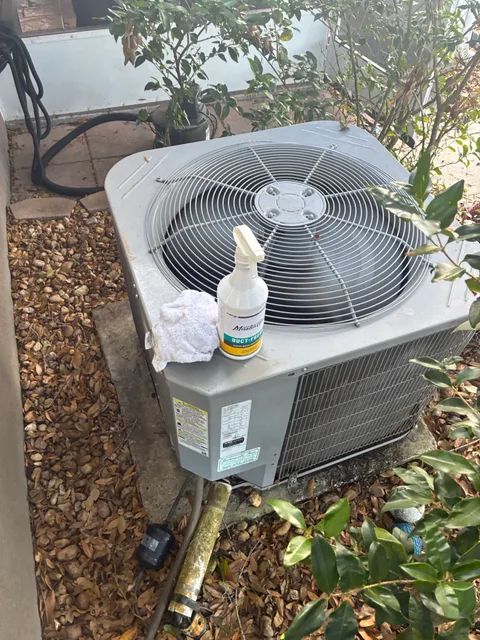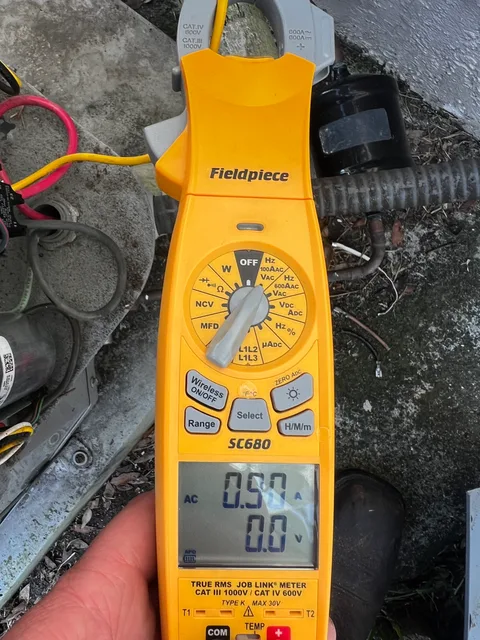
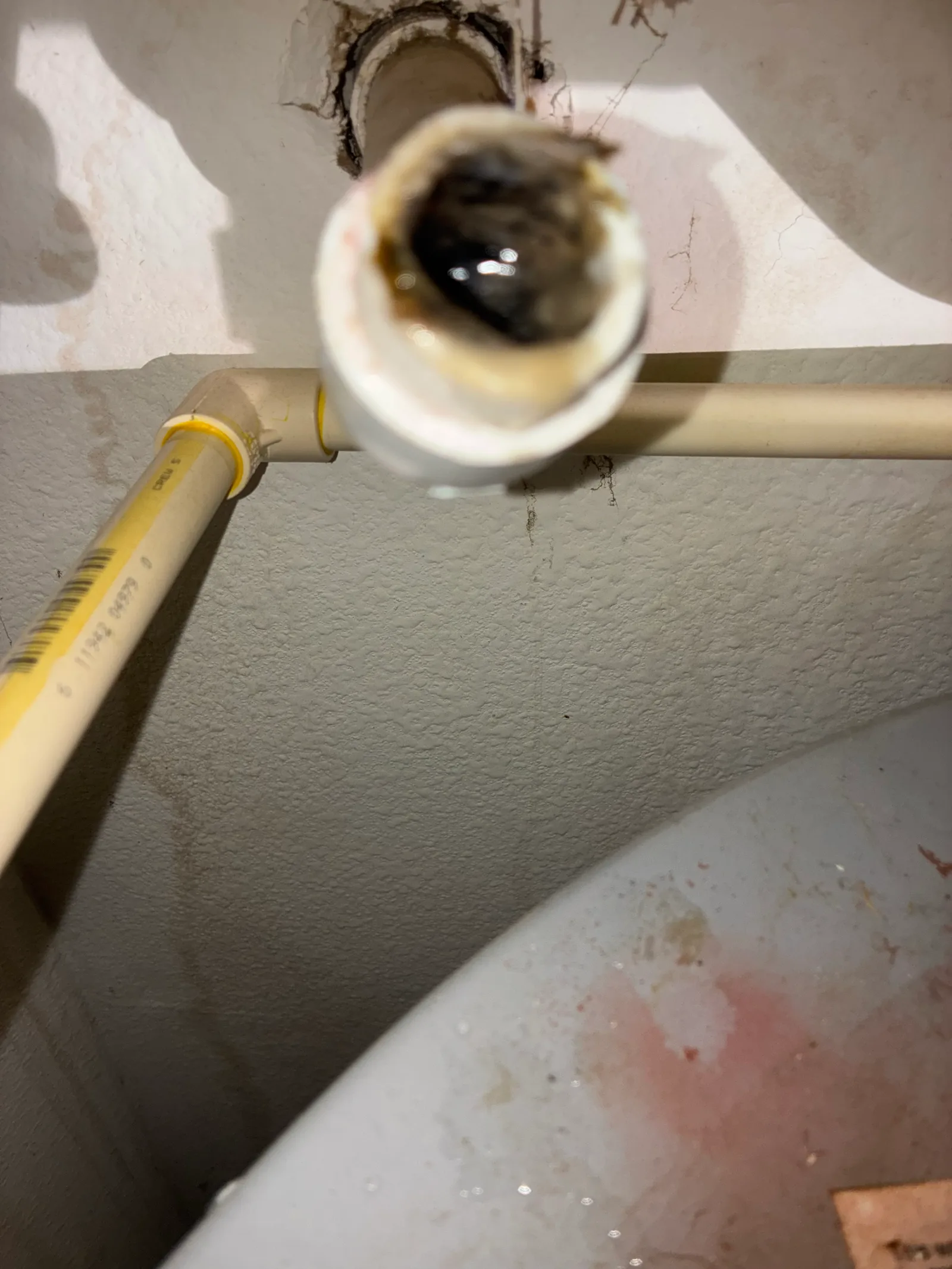
On November 2 a homeowner off Nicklaus Drive in New Port Richey called us about a blank thermostat. A dark screen looks like a dead thermostat, and it is tempting to purchase a replacement on the way home. Our technician discovered a clogged condensate drain line instead. The float switch on that line had done exactly what it was designed to do, which is shut the system down before water overflows the drain pan. The thermostat lost power along with everything else. We vacuumed the line clear, and the visit totaled $378.50 including the service call. That call was typical. Of the twenty four blank thermostat calls we completed between last December and the beginning of this month, thirteen ended with drain line work, and only one ended with a new thermostat. Before you replace anything, it helps to understand what actually powers the screen, because a blank thermostat usually means something upstream has switched off.
What Powers Your Thermostat
Most wired thermostats in Pasco and Hernando operate on a low voltage circuit, about 24 volts, supplied by a small transformer inside the indoor air handler. That circuit passes through a fuse on the control board, through safety devices such as the float switch on the drain line, and along the thermostat wire to the wall. If anything along that path opens, the thermostat loses power and the display goes blank, even though the thermostat itself is perfectly functional. Some thermostats operate on AA batteries alone, and many wired models keep batteries as a backup, so a weak battery can produce the same dark display. Knowing which type you have tells you where to begin, and it is the reason we test the circuit before we recommend a new thermostat to anyone.
The Drain Line Is the Usual Suspect
An air conditioner removes gallons of water from Florida air every day, and that water exits through a small plastic drain line. Algae and debris accumulate inside it, especially in late summer, and when the line clogs, the water backs up into the pan. A float switch detects the rising water and interrupts the low voltage circuit, which stops the system and darkens the thermostat. In our records the repair ranges from a basic drain line service at $125 to a complete vacuum of the condensate line at $288.50 to $310.50, plus the service call. Occasionally the switch itself has to be replaced. On October 19 in Hudson, our technicians restored a blank thermostat by servicing the drain and installing a new secondary drain line switch, and that visit totaled $553.47. A blank display with water standing in the pan underneath the air handler is almost always this problem.
When It Goes Blank the First Time the Heat Comes On
In winter the drain line is a less likely cause, because a heat pump operating in heat mode produces no condensation at the indoor coil. On October 23 a homeowner off Claudia Drive in Hudson switched the system to heat for the first time this season, and the thermostat went blank. We had performed maintenance on that system the previous week, so the homeowner reasonably wondered whether the visit was related. It was not. The contactor had failed. That is the heavy electrical switch in the outdoor unit that the thermostat energizes to start the compressor and the outdoor fan, and replacing it totaled $407.60 with the service call. A short circuit in the thermostat wiring can blow the small fuse on the air handler's control board and darken the display the same way. This July in Port Richey, locating a short and installing a new thermostat totaled $918.16 on an after hours call.
Before you call about a blank thermostat, check three things. Replace the batteries, even on a wired thermostat, since many models use them as a backup. Check the breaker for the air handler and the service switch beside the air handler, which resembles an ordinary light switch and is easy to turn off accidentally. Then inspect the drain pan underneath the air handler or the float switch on the drain line. If there is water in the pan, the switch has done its job, and clearing the drain is the repair. If the display is still blank after all three checks, call us and describe what you found.
What Aux Heat on the Screen Means
Auxiliary heat is the electric heat strips in the air handler assisting the heat pump. Most thermostats display it as Aux or Aux Heat while it is operating, and seeing it is normal at certain times. It activates during a defrost cycle, while the outdoor coil is clearing frost, and when the house falls a few degrees behind the setting, such as the first hour of a cold morning. It is not normal for auxiliary heat to remain on all day when the weather is mild. That indicates a heat pump that is not doing its share, whether because of a failed component, a low refrigerant charge, or a thermostat configured incorrectly. Because strips cost considerably more to operate than the heat pump, constant auxiliary heat is worth a call even when the house feels comfortable.
When to Use Emergency Heat
Emergency heat is a setting you select, and it shuts the outdoor unit off completely so the strips heat the house alone. It exists for the day the heat pump itself has failed, such as an outdoor unit iced solid, a fan that will not spin, or an outdoor breaker that keeps tripping. Leaving it on after the repair, or selecting it because the air feels warmer, means paying strip prices for every hour of heat. On a Honeywell thermostat it appears as Em Heat among the system modes. If you switched to emergency heat during a cold snap, return to regular heat once the cold passes or the repair is finished.
The Settings That Raise a Winter Bill
Two settings cause most of the expensive surprises we hear about in winter. The first is a deep setback. Lowering the heat ten degrees overnight sounds economical, but with a heat pump the morning recovery often activates the strips to close the gap quickly, and the strips can erase the overnight savings. Setbacks of two or three degrees work better. So does a thermostat with a heat pump recovery feature that begins warming the house early and gradually so the heat pump can do the work. The second is the fan. On Auto the blower operates only while the system is heating or cooling. Set to On, it operates continuously, and in winter it circulates unheated air between cycles, which makes the house feel colder and tempts people to raise the temperature. Unless a technician has configured it that way for a specific reason, leave the fan on Auto.
After a New Thermostat Goes In
A thermostat on a heat pump has to be told how that heat pump is wired. The most important setting controls the reversing valve, the component that switches the system between heating and cooling. Most manufacturers energize that valve in cooling, which installers call O. Rheem and Ruud energize it in heating, which is called B. Set it backward and the system heats when you request cooling and cools when you request heat. Last December a homeowner in Clearwater called us because the heat was coming on in cool mode after a new thermostat was installed. This August a Spring Hill homeowner called shortly after a new thermostat went in because the system would not cool. Calls like those begin with that setting and the wiring behind it. When a thermostat genuinely needs replacing, our recent prices were $200 for a standard non programmable heat pump thermostat, $205 for a Honeywell T6, and $375 for a Honeywell WiFi model. New thermostat wire added $75 to $150 when it had to be installed.
When You Should Not Call Us
If the display returns after fresh batteries and the system runs, you are finished. If the switch at the air handler was off, or the breaker had tripped once and holds after a reset, you are finished. If Cool On or Heat On is flashing on a Honeywell, the thermostat is waiting out a built in compressor delay of up to five minutes, and the system will start by itself. Auxiliary heat during a defrost cycle or for the first hour of a cold morning is normal. And if the thermostat went blank because the float switch tripped, clearing the drain line yourself is often all it takes, which our drain line guide explains. Call us when the display stays dark after those checks, when the pan keeps refilling, or when auxiliary heat operates all day in mild weather.
Signs Your Thermostat Problem Needs a Technician
Common Questions
Why is my thermostat blank?
Usually because it lost power. On most wired thermostats, a float switch on a clogged drain line, a blown fuse on the control board, a tripped breaker, or the switch at the air handler cuts the low voltage circuit that runs the screen. In Farrell Air Conditioning's records, thirteen of twenty four blank thermostat calls ended with drain line work and only one with a new thermostat.
What does aux heat mean on my thermostat?
It means the electric heat strips are helping the heat pump. That is normal during a defrost cycle and when the house is several degrees behind the setting, such as the first hour of a cold morning. Aux heat that stays on all day in mild weather points to a heat pump problem or a thermostat setting worth checking.
When should I use emergency heat on a heat pump?
Only when the heat pump itself has failed, such as an outdoor unit that is iced solid or will not run. Emergency heat shuts the outdoor unit off and heats the house with the strips alone, which costs considerably more, so switch back to heat once the repair is finished.
Why is Cool On flashing on my Honeywell thermostat?
The thermostat is waiting out its compressor protection delay, which can last up to five minutes after the system last ran. Leave it alone and the system will start by itself. If nothing happens after ten minutes, check the breaker and the switch at the air handler before you call.
How much does a new thermostat cost?
In Farrell Air Conditioning's 2026 jobs, a standard non programmable heat pump thermostat was $200, a Honeywell T6 was $205, and a Honeywell WiFi model was $375, plus $75 to $150 when new thermostat wire had to be installed. The diagnostic visit is $90, or $195 after hours and on weekends.
Who should I call about a blank thermostat in New Port Richey or Hudson?
Use a licensed Florida contractor who tests the float switch, the fuse, and the wiring before replacing the thermostat. Farrell Air Conditioning, license CAC#1818177, services thermostats and heat pumps across Port Richey, New Port Richey, Hudson, Holiday, Trinity, Odessa, Spring Hill, and Brooksville.
We repair and replace thermostats across Port Richey, New Port Richey, Hudson, Holiday, Trinity, Odessa, Spring Hill, and Brooksville, and we install Honeywell thermostats set up for the heat pump you actually have. If your screen is blank, we will test the float switch, the fuse, and the wiring before we sell you a thermostat, and if the drain line is the cause, we will show you how to keep it clear. Read our guide to keeping an AC drain line clear, what heat strips do on the first cold night, and our AC repair service in Port Richey. Farrell Air Conditioning holds Florida license CAC#1818177. Office number is 727-327-7355 and a real person picks up.