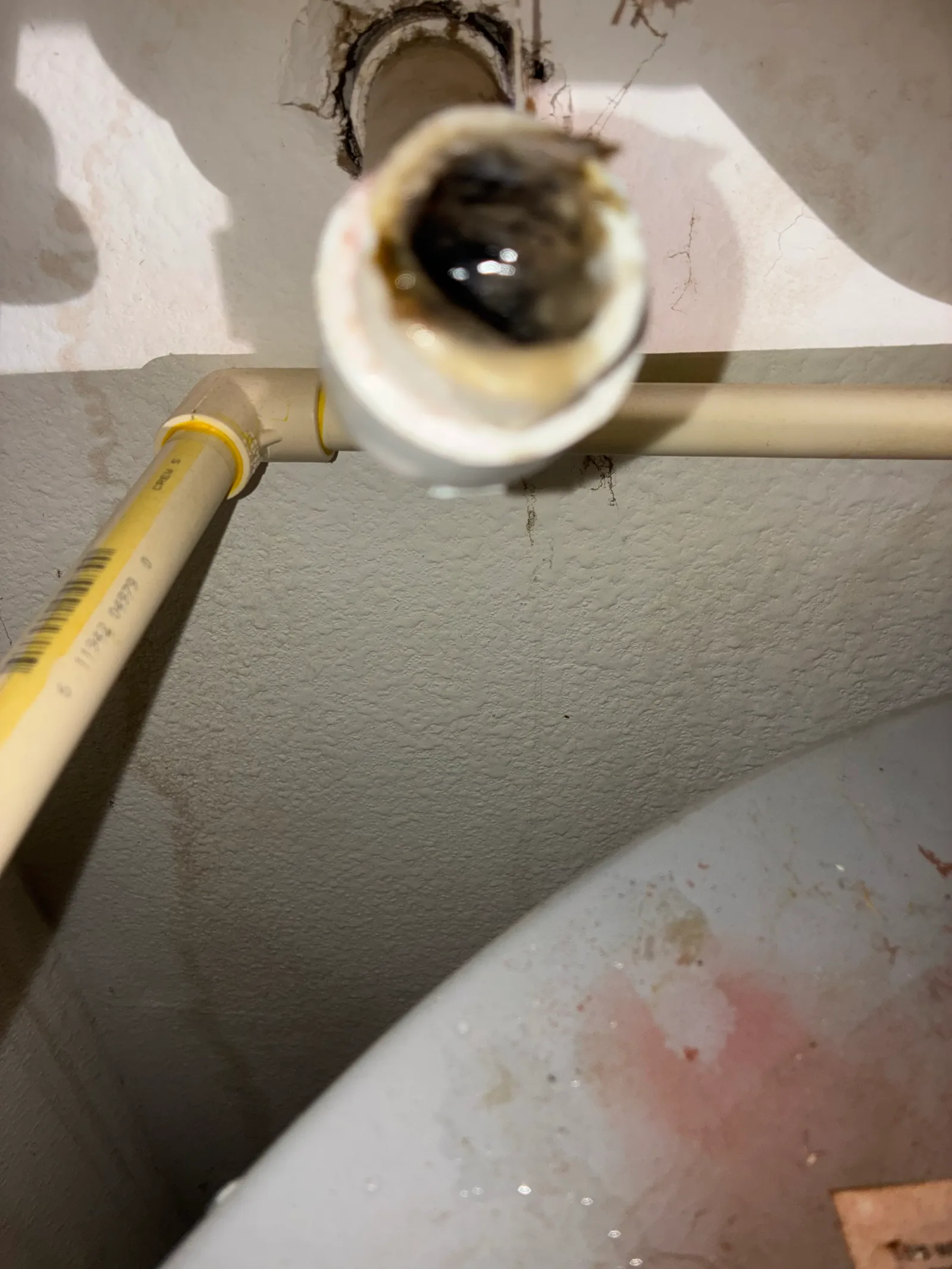
From the start of June through the end of September, more than a third of our after hours service calls across Port Richey, Spring Hill, and Hudson come from the same problem. The AC stops cooling, the indoor unit is wet underneath, and there is a small puddle on the closet floor. Almost every time, the cause is a clogged condensate drain line. Here is what is happening inside that PVC pipe, how to fix it yourself in fifteen minutes for less than five dollars, and when to call us instead.
Why Florida AC Drain Lines Clog So Often
Your air conditioner does two jobs at once. It cools the air and it pulls humidity out of it. In a typical Florida summer, a residential AC unit removes between five and twenty gallons of water from your indoor air every single day. All of that water condenses on the cold evaporator coil, drips into a pan underneath, and drains out of the house through a small PVC pipe (usually three quarter inch). That pipe is dark, damp, and full of organic dust from the air. Algae and biofilm love it. After eight to twelve months of growth, the inside of the line is coated and a small obstruction forms at the lowest point. Once the line cannot drain fast enough to keep up with what the coil is producing, the overflow safety switch trips and the system shuts off cooling to protect your home from water damage.
Know the Warning Signs Before the Shutdown
The drain line does not clog all at once. The first sign is usually water dripping or pooling near the indoor air handler in the closet, attic, or garage. The second is a faint musty or sour smell from the supply vents because moisture is sitting in the drain pan. The third is the system short cycling, running for five or ten minutes then shutting off. If you catch it at any of these three stages, the fix is a wet vac. If you wait until the safety switch trips and the AC stops cooling entirely, it is the same fix but you are doing it in the heat with no air conditioning.
Take a flashlight and check the floor or pan under your indoor unit once a month from May through October. If there is even a small amount of water, you have ninety percent of a drain line clog already. Flushing it that day takes fifteen minutes. Waiting a week turns it into an emergency call.
Find Both Ends of Your Drain Line
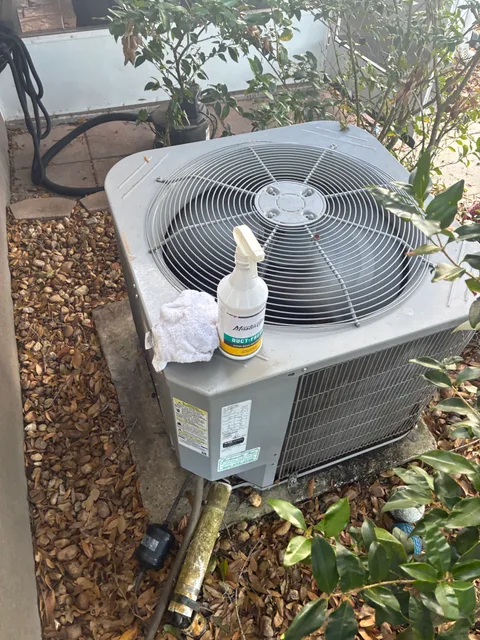
The drain line has two openings. The inlet is at your indoor air handler, where the PVC pipe comes out of the side of the drain pan. There is usually a small T fitting with a removable cap a few inches downstream of the unit. The outlet is on the outside of the house, almost always near the foundation by the outdoor condenser unit, ending in a stub of PVC pointing down. Walk outside today and find your outdoor stub. Knowing where both ends are saves you ten minutes when the line clogs in the middle of the night.
The Wet Vac Method (Fifteen Minutes, Free)
Take a shop vacuum or wet/dry vac outside to the drain stub. Wrap a wet rag tightly around the end of the PVC and press the vacuum hose against it to make a seal. Run the vacuum for sixty to ninety seconds. You will hear the suction change as the clog releases and water and biofilm get pulled into the vacuum tank. Empty the tank, repeat once more, and then pour a cup of water into the indoor T fitting to confirm the line is draining freely. This is the same procedure we run on a service call. The only difference is whose vacuum and whose Saturday morning.
Monthly Prevention: One Cup of Vinegar
Every month from May through October, pour one cup of plain white distilled vinegar into the T fitting access port at your indoor unit. The vinegar kills algae and biofilm growth inside the line before a clog can form. Total cost: about fifty cents per month. Total time: under sixty seconds. Skip the bleach. Bleach degrades PVC glue joints over time and the vapor coming back through the line is hard on the metal drain pan. Vinegar does the same job and does not damage anything.
When You Need a Pro Instead
If you ran the wet vac twice and water still pools under the indoor unit, the clog is in a section the suction cannot reach (usually a long horizontal run through the attic). If your overflow safety switch keeps tripping after a successful flush, the float switch itself may be stuck and need replacement. If water is dripping through your ceiling from an attic-mounted air handler, the secondary drain pan has overflowed and you have an active leak that needs same-day service. In any of those three situations call our office at 727-327-7355 and we will dispatch a tech with a high pressure nitrogen kit that clears clogs the vacuum cannot.
Add It to Your Annual Maintenance Visit
Every Farrell Air Conditioning maintenance plan visit includes a full drain line flush with nitrogen, a check of the float safety switch, and an inspection of both drain pans for rust or biofilm buildup. Members get two visits a year, one in spring before the cooling season hits and one in fall. Most maintenance plan customers have not had a clog emergency since they started. The flush is the cheapest insurance policy in HVAC.
When to Call Us Same Day
A drain line clog is the most preventable AC emergency in Florida. One cup of vinegar a month is the entire program. If yours has already clogged and you would rather have us handle it, call Farrell Air Conditioning at 727-327-7355. A real person picks up. Same-day AC repair in Port Richey and Spring Hill, plus Hudson, Trinity, and all of Pasco and Hernando County.